



A portable sand blasting machine is one of the most practical tools for cleaning and preparing metal, concrete, and fabricated surfaces. It is moved to the job instead of the job being moved to it. If you handle rust removal, paint stripping, or coating preparation, this guide covers what you need to choose well.
What Is a Portable Sand Blasting Machine?
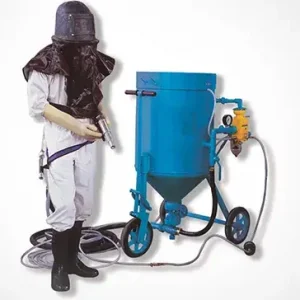
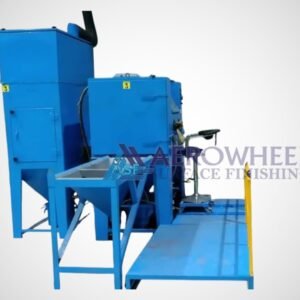
A portable sand blasting machine is a mobile abrasive blasting unit. It uses compressed air to propel abrasive media through a hose and nozzle at high speed onto a surface. The impact removes rust, scale, old paint, and contaminants, and leaves a clean, slightly roughened profile that helps coatings stick.
In short: it is a wheeled, pressure-fed blasting pot that you can bring to the work site.
How Does It Work?
- Fill the pot: Abrasive is loaded into a pressure vessel (hopper).
- Pressurise: Compressed air from a compressor pressurises the vessel.
- Meter the media: A valve releases a controlled flow of abrasive into the air stream.
- Blast: The mixture travels through the hose and exits the nozzle at high velocity.
- Recover or discard: Spent abrasive is collected or swept up, depending on the media and setup.
Types of Portable Sand Blasting Machines
1. Pressure-fed blasting pots. The most common type. A sealed vessel delivers abrasive consistently, which suits heavy rust and thick coatings.
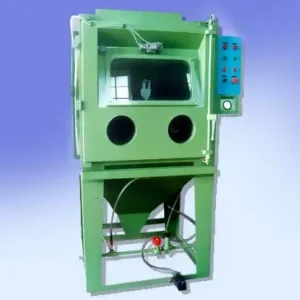
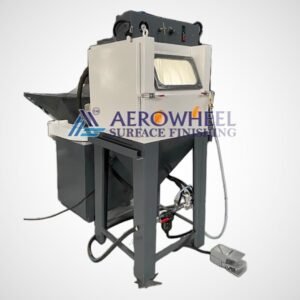
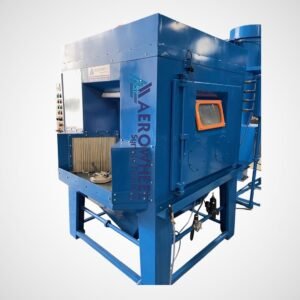
2. Suction-fed units. Air flow draws abrasive into the stream. They are lighter and suit small, light-duty jobs. See Aerowheel’s suction vacuum blast cabinet range for the enclosed version of this principle.
3. Wet blasting systems. Water is mixed with the abrasive to suppress dust and give a smoother finish. This option suits delicate surfaces and is covered in wet blast cabinets.
4. Trolley and skid-mounted units. Different capacities and wheel configurations let you match the machine to site conditions, from a workshop floor to a tractor-towed setup.
Common Uses
- Rust and scale removal from steel structures, tanks, and pipelines
- Paint and old coating stripping
- Surface preparation before painting or powder coating
- Cleaning fabricated parts and heavy equipment
- Etching and surface finishing
- Cleaning moulds and similar components
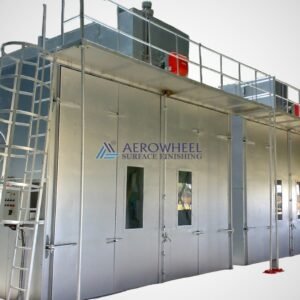
Many users pair blasting with finishing lines such as paint spray booths and ovens or powder coating systems, because clean, profiled metal gives better coating adhesion.
Key Benefits
- Mobility: Take the machine to large or fixed structures that cannot be moved.
- Lower investment: It costs less than fixed blast room systems or automated lines.
- Fast surface preparation: Removes heavy contamination much faster than manual wire brushing or grinding.
- Versatile media: Works with several abrasives, including sand, steel grit, glass beads, and copper slag, depending on the finish required.
- Simple operation: Basic controls make training easier and maintenance straightforward.
- Better coating life: A properly prepared surface improves paint and coating durability.
Portable vs Fixed Blasting Equipment
| Factor | Portable Sand Blasting Machine | Cabinet / Fixed System |
| Best for | On-site, large or immovable work | Repeat jobs on small or medium parts |
| Mobility | High | Low |
| Dust control | Needs extra precautions | Enclosed, easier to contain |
| Output | Flexible, operator-dependent | Consistent, higher volume |
| Cost | Lower | Moderate to high |
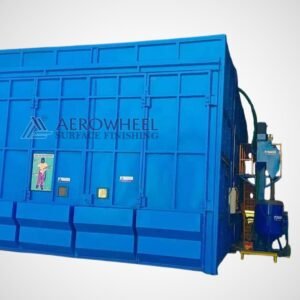
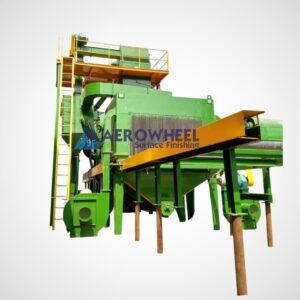
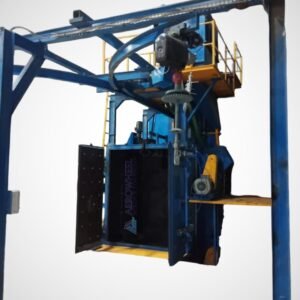
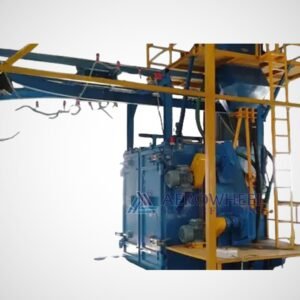
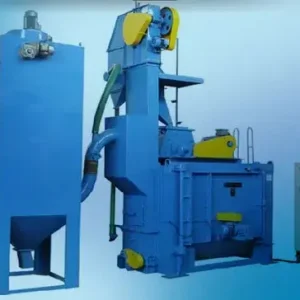
For small components made in volume, an abrasive blasting cabinet or pressure blast cabinet is often the better fit. For high-volume production, consider a tunnel type shot blasting machine or hanger shot blasting machine.
Buying Guide: What to Check Before You Buy
1. Tank (pot) capacity. Larger pots run longer between refills but are heavier to move. Match capacity to the typical job length.
2. Compressor compatibility. The machine needs enough air volume (CFM) and pressure. An undersized compressor causes slow, uneven blasting. Check the compressor and nozzle requirements together.
3. Abrasive type. Choose media based on the surface and finish. Harder abrasives cut faster, while softer media protect the base material.
4. Build quality. Look for a strong pressure vessel, reliable valves, quality hoses, and wear-resistant nozzles.
5. Safety features. A deadman control, moisture separator, and proper operator protection (helmet, gloves, suit) are essential. Dust and silica exposure are real health risks, so follow local safety rules and consider alternatives to silica sand.
Global Trends in Shot Blasting Machine Manufacturing
Top Sand Blasting Suppliers in Rajasthan for 2025
How We Helped a Client Reduce Downtime with a New Shot Blasting Setup
6. Mobility. Wheel type and frame design affect how easily the unit moves across site terrain.
7. Spare parts and service. Nozzles, hoses, and valves wear out. Easy access to blaster spare parts keeps downtime low.
8. Supplier credibility. Work with an established sand blasting machine manufacturer that offers guidance, warranty, and after-sales support.
Maintenance Tips
- Use dry, clean abrasive to prevent clogging.
- Drain the moisture separator regularly.
- Inspect hoses, couplings, and nozzles before every shift.
- Replace worn nozzles early to protect efficiency and air consumption.
- Depressurise and clean the vessel after use.
Frequently Asked Questions
What is a portable sand blasting machine used for?
It is used for rust removal, paint stripping, and surface cleaning and preparation on-site.
Which abrasive is best for a portable blaster?
It depends on the job. Steel grit suits heavy rust, glass beads suit finishing, and copper slag is common for large-scale work.
What size compressor do I need?
Match the compressor’s air volume and pressure to the machine and nozzle size. Check the manufacturer’s specifications.
Is sand blasting safe?
It is safe with correct controls. Use proper respiratory protection, ventilation, and low-silica or silica-free abrasives where required.
Portable machine or blasting cabinet?
Choose portable for on-site and oversized work. Choose a cabinet for small parts and cleaner, repeatable results.
Conclusion
A portable sand blasting machine is a flexible, cost-effective solution for rust removal, coating preparation, and on-site cleaning. Focus on capacity, compressor match, abrasive choice, safety, and supplier support. If you need a different setup, a blasting machine from the wider shot blasting machine range may suit you better.
Ready to choose? Browse Aerowheel’s complete product range or contact our team for a recommendation based on your application.