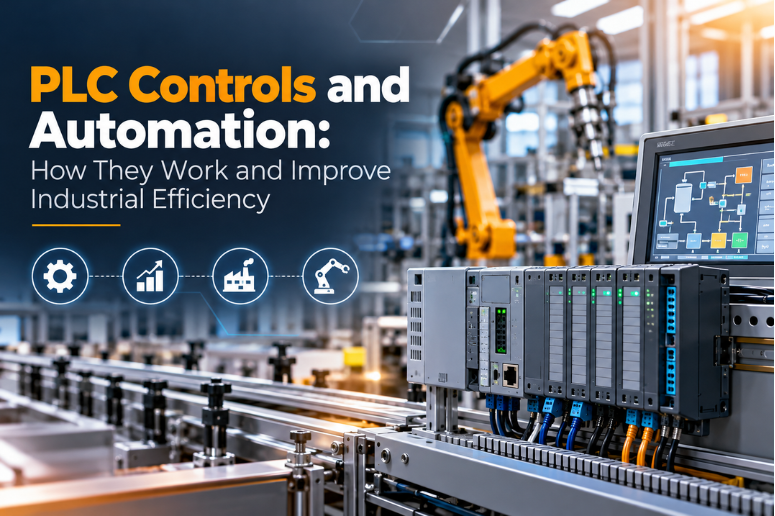





PLC controls and automation use a programmable logic controller (PLC) to monitor machine inputs, run pre-set logic, and operate outputs such as motors, valves, and conveyors with minimal human intervention. Factories use PLC automation to raise speed, repeatability, and safety.
Key Takeaways
- A PLC is a rugged industrial computer built for real-time machine control.
- PLC industrial automation reduces downtime, errors, and manual labour.
- PLCs suit repetitive, high-precision processes such as blasting, painting, and assembly.
What Are PLC Controls and Automation?
A programmable logic controller is a ruggedised digital computer designed for factory floors. It withstands heat, dust, vibration, and electrical noise. Engineers program it to automate one machine or a whole production line.
PLC automation replaces hard-wired relay panels with software logic. Changing a process then means editing a program rather than rewiring a cabinet.
How Do PLC Controls Work?
A PLC runs a continuous scan cycle in four steps:
- Input scan: The PLC reads signals from sensors, push buttons, limit switches, and encoders.
- Program execution: It processes those inputs against the stored control logic.
- Output update: It sends commands to motors, solenoid valves, actuators, and indicators.
- Communication and diagnostics: It exchanges data with HMIs, SCADA systems, and other controllers, and logs faults.
This cycle repeats within milliseconds, which gives the machine consistent, real-time control.
Core Components of a PLC System
- CPU (processor): Executes the program and manages the scan cycle.
- Input/output (I/O) modules: Connect field devices to the controller.
- Power supply: Provides stable power to the system.
- HMI (human-machine interface): Lets operators monitor and adjust settings.
- Programming software: Used to write logic, commonly ladder logic, function block diagram, or structured text.
Benefits of PLC Industrial Automation
1. Higher productivity: Machines run at optimised, repeatable cycle times with fewer manual stops.
2. Consistent quality: Automated parameter control reduces human variation. This matters in processes like surface finishing, where blasting time and abrasive flow directly affect results.
3. Improved safety: PLCs integrate emergency stops, interlocks, and guard monitoring to protect operators.
4. Faster troubleshooting: Diagnostic data points maintenance teams to the exact fault, which cuts downtime.
5. Flexibility and scalability: New sequences or machines can be added through programming rather than major rewiring.
6. Lower operating costs: Efficient energy use, less rework, and reduced scrap improve long-term returns.
PLC Automation in Surface Treatment Equipment
PLC controls are well suited to surface preparation and finishing, where timing, sequencing, and repeatability decide the outcome.
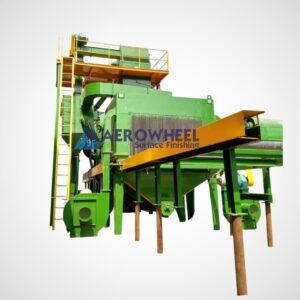
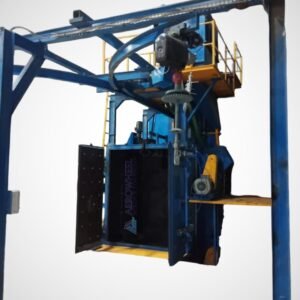
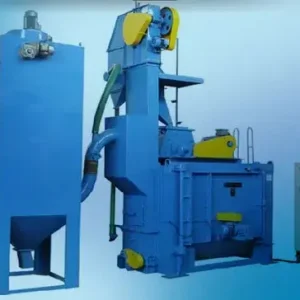
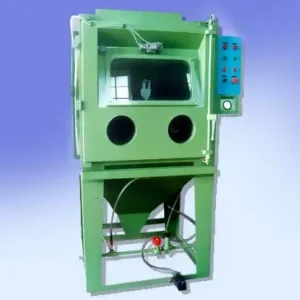
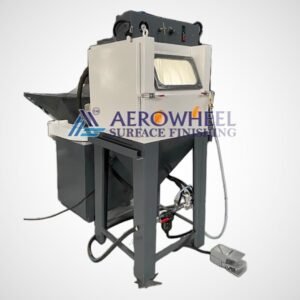
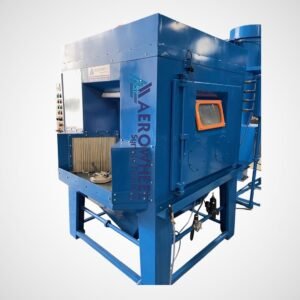
- Shot blasting: PLC logic can coordinate conveyor speed, abrasive flow, blast wheel operation, and dust collection in a shot blasting machine. Continuous-flow designs such as a tunnel type shot blasting machine or a hanger shot blasting machine benefit from automated cycle control.
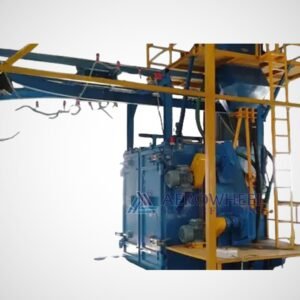
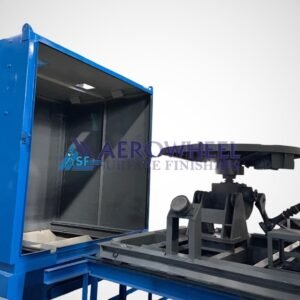
- Batch and component handling: An airless tumblast type shot blasting machine or an airless swing table shot blasting machine can use timers and sensors to deliver uniform cleaning for each load.
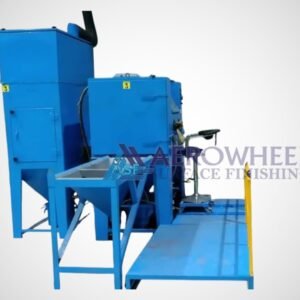
- Large components: A blast room system can combine PLC-managed recovery, ventilation, and abrasive handling.
- Coating lines: A paint spray booth and oven or powder coating system relies on precise temperature, airflow, and conveyor timing, all PLC-controlled functions.
- Indexed processes: Rotary indexing machines depend on accurate positioning and sequencing.
Aerowheel serves many sectors, so explore the industries we serve to see where automated surface treatment applies.
Industries That Rely on Sand Blasting in India
The Importance of Proper Lighting in Blast Room Setup
What Is a Blast Room? Working, Design & Benefits
How to Choose the Right PLC Automation Solution
Before investing, evaluate these factors:
- I/O count and process complexity: Choose a controller that fits current needs with room to expand.
- Environment: Dust, heat, and vibration require rugged, well-protected enclosures.
- Communication protocols: Make sure the PLC connects with existing HMIs, drives, and plant networks.
- Safety requirements: Confirm interlocks and emergency functions meet applicable standards.
- Support and spares: Reliable service and genuine blaster spare parts keep machines productive over the long term.
Best Practices for PLC Implementation
- Define the process sequence clearly before programming.
- Use modular, well-documented code.
- Test logic in simulation before commissioning.
- Back up programs and keep revision records.
- Train operators and maintenance staff on the HMI and basic diagnostics.
- Schedule regular inspections of sensors, wiring, and I/O modules.
Conclusion
PLC controls and automation are the backbone of modern industrial efficiency. They deliver precise, repeatable, and safe operation across blasting, finishing, and coating processes. Choosing the right controller and applying good programming and maintenance practices helps manufacturers cut downtime and improve output.
Looking for automated surface treatment equipment? Review our process or contact the Aerowheel team to discuss a solution for your plant.
Frequently Asked Questions
What is the main purpose of a PLC?
A PLC automates machine and process control by reading inputs, running stored logic, and switching outputs in real time.
What is the difference between PLC controls and automation?
PLC controls are the controller hardware and logic. Automation is the broader goal of running processes with minimal manual input, and PLCs are one of its core tools.
Which industries use PLC industrial automation?
Manufacturing, automotive, foundries, power, food processing, packaging, and metal finishing all use it.
Can PLCs be added to existing machines?
Yes. Many older machines can be upgraded with PLC panels, though feasibility depends on the machine’s condition and design.
How does PLC automation improve efficiency?
It shortens cycle times, reduces errors and rework, speeds up fault diagnosis, and lowers manual labour requirements.