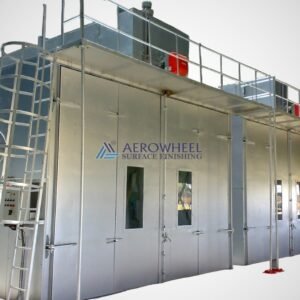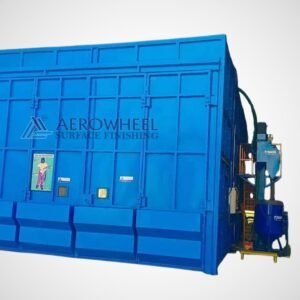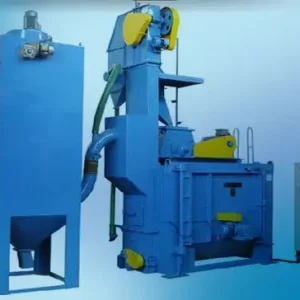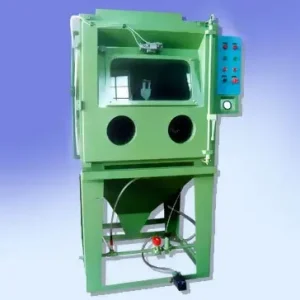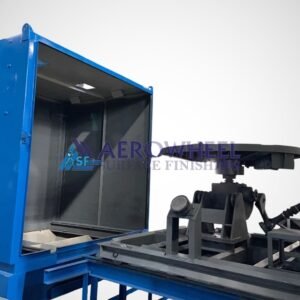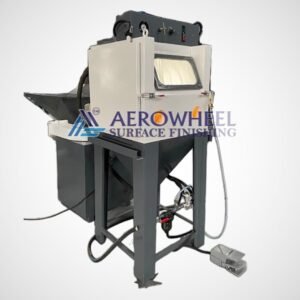




When it comes to industrial painting, many manufacturing units still rely on manual painting in open areas to save initial costs. On the other hand, industries focused on quality, safety, and long-term efficiency invest in paint spray booths.
At first glance, manual painting may appear cheaper. But when cost and quality are evaluated together, the reality is very different. This comparison will help you clearly understand the true cost and quality difference between paint spray booths and manual painting.
Paint Spray Booths vs Manual Painting – Detailed Comparison Table
| Comparison Factor | Manual Painting (Open Area) | Paint Spray Booth |
|---|---|---|
| Initial Setup Cost | Low initial cost | Higher initial investment |
| Paint Finish Quality | Inconsistent, dust-prone finish | Smooth, uniform, professional finish |
| Coating Thickness Control | Difficult to control, uneven | Uniform and consistent thickness |
| Paint Wastage | High due to overspray | Low due to controlled airflow |
| Rework & Repainting Cost | Frequent rework required | Minimal rework |
| Worker Safety | High exposure to fumes and chemicals | Safer environment with ventilation |
| Dust & Overspray Control | Poor control | Excellent filtration and containment |
| Drying & Curing Consistency | Unpredictable | Stable and controlled |
| Productivity | Slower due to interruptions | Faster, continuous operation |
| Long-Term Operating Cost | High due to wastage & rework | Lower due to efficiency |
| Regulatory Compliance | Difficult to meet standards | Easier compliance |
| Overall Cost Over Time | Appears cheap, becomes expensive | Higher initially, cost-effective long term |
| Suitability | Temporary or very small-scale jobs | Industrial & production environments |
Cost Comparison: Short-Term vs Long-Term Reality
Manual painting has a low setup cost, which attracts small units initially. However, over time, hidden costs start adding up—paint wastage, repeated rework, production delays, health-related issues, and compliance risks.
Paint spray booths require a higher initial investment, but they significantly reduce recurring expenses. Lower paint consumption, fewer defects, faster production cycles, and minimal rework make spray booths far more economical in the long run.
Quality Comparison: Visible Difference in Results
Manual painting is heavily dependent on operator skill and environmental conditions. Dust, airflow variations, and overspray lead to uneven finishes, rough surfaces, and inconsistent coating thickness.
Paint spray booths provide a controlled environment where airflow, dust, and overspray are managed. This results in:
- Consistent paint appearance
- Better coating adhesion
- Improved durability
- Professional-grade finish
For industries where product appearance and coating performance matter, the quality difference is clearly visible.
Impact on Productivity and Delivery Timelines
Manual painting often causes workflow disruptions due to drying delays, cleaning requirements, and rework. This affects delivery schedules and production planning.
Paint spray booths allow predictable and continuous operations. Faster drying, cleaner processes, and reduced rework help industries meet deadlines more reliably.
Understanding the Working Pressure and Speed of Shot Blasters
How We Customized a Shot Blasting System for a Jodhpur Client
How to Choose Between Suction and Pressure Sand Blasting
Safety and Compliance Considerations
Manual painting exposes workers to harmful fumes and chemicals, increasing health risks and safety concerns. It also makes it harder to comply with pollution control and workplace safety regulations.
Paint spray booths are designed with ventilation and filtration systems that protect workers and help industries meet regulatory requirements without constant struggle.
Aerowheel Surface Finishing’s Expert Recommendation
At Aerowheel Surface Finishing, we recommend paint spray booths for any manufacturing unit that:
- Values consistent quality
- Wants to reduce long-term costs
- Prioritizes worker safety
- Needs regulatory compliance
- Aims for scalable production
Manual painting should only be considered for temporary or very low-volume applications.
Final Conclusion
Manual painting may look cost-effective at the start, but it results in higher expenses, poor quality, and operational challenges over time. Paint spray booths, while requiring higher initial investment, deliver superior quality, lower long-term costs, and reliable industrial performance.
For manufacturers focused on growth, quality, and sustainability, paint spray booths are the smarter and more profitable choice.