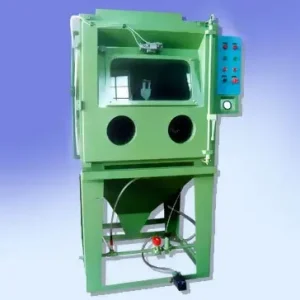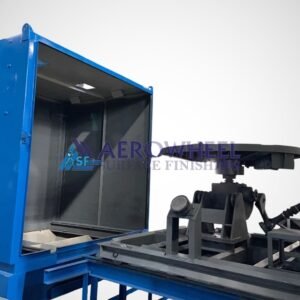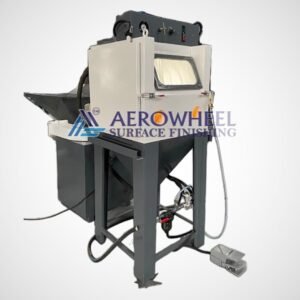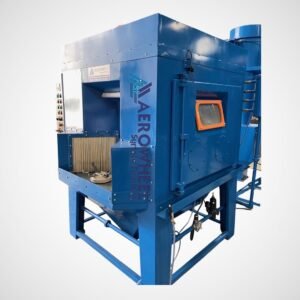





The shot peening process is a specialized cold-working method engineered to enhance the structural integrity and fatigue strength of critical metallic components. Industrial machinery faces constant cyclic tension, vibration, and thermal shifts. Over time, these dynamic loads cause microscopic stress fractures that result in catastrophic component failure.
Applying controlled shot peening counteracts this mechanical fatigue, prolonging asset lifespan across high-stress industries like aerospace, automotive manufacturing, and heavy engineering.
What Is the Shot Peening Process?
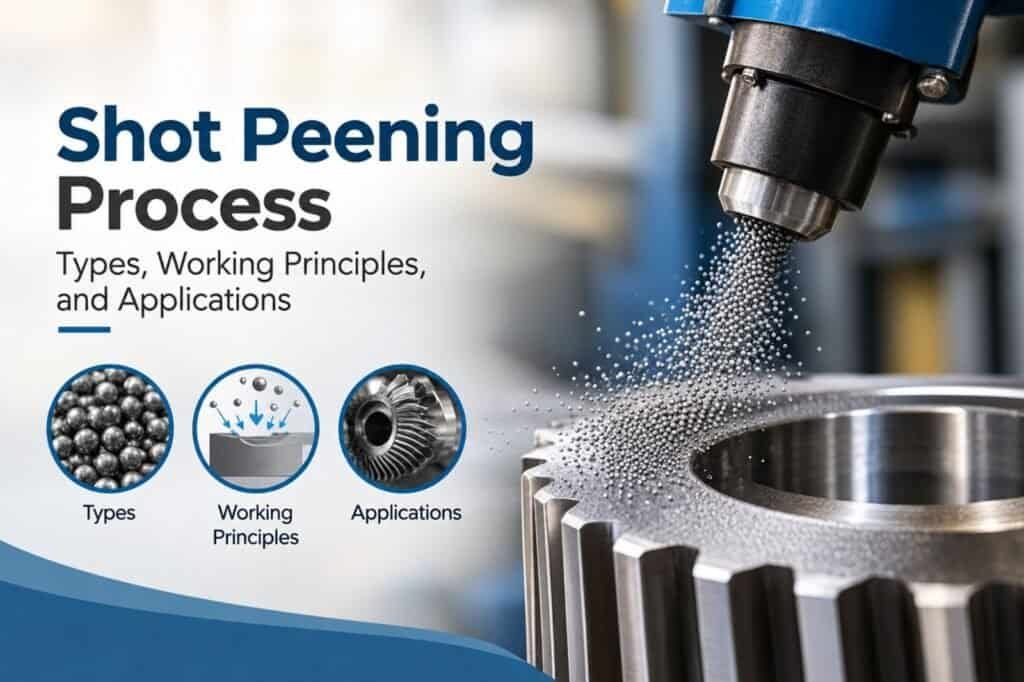
Shot peening is a precision mechanical surface treatment where spherical media (shots) bombard a metal component under tightly controlled velocity, pressure, and angle.
Each spherical particle acts as a tiny ball-peen hammer, striking the metal and creating a slight plastic indentation on the surface. Below this indentation, the metal grains push back against the deformation, producing a permanent layer of residual compressive stress. Because fatigue cracks originate almost exclusively at points of surface tension, this compressive layer acts as a mechanical shield that arrests crack initiation and slows crack propagation.
Working Principle of Shot Peening
The fundamental principle of shot peening centers on strain hardening and the transformation of tensile surface stresses into beneficial compressive stresses.
- Impact and Dimple Formation: High-velocity spherical media strike the target substrate, causing localized plastic deformation.
- Compressive Stress Induction: As the surface yields plastically, the elastic core beneath tries to restore the material to its original shape. This elastic recovery traps the surface in a continuous state of high compressive stress.
- Tensile Stress Neutralization: Dynamic operational loads create surface tensile stress. The pre-stressed shot peened surface neutralizes these external tensile forces, requiring significantly greater operational energy before micro-cracks can initiate.
To verify repeatable results, manufacturers measure Almen intensity using standard calibrated steel test strips and calculate surface coverage (often 100% to 200%) to confirm that every square millimeter receives uniform compressive stress.
Primary Types of Shot Peening Methods
Different engineering components require distinct peening mechanisms based on work piece geometry, production volume, and accessibility:
1. Air Blast Peening
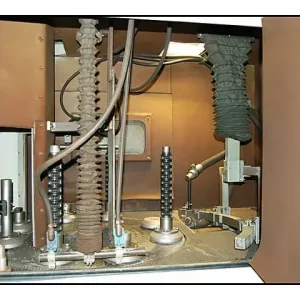
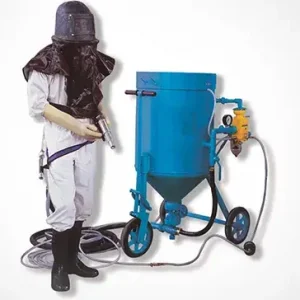
Air blast peening accelerates media using high-pressure compressed air directed through precision nozzles. This setup allows targeted nozzle articulation, making it ideal for deep recesses, internal bores, gear teeth, and complex turbine components.
2. Centrifugal Wheel Peening
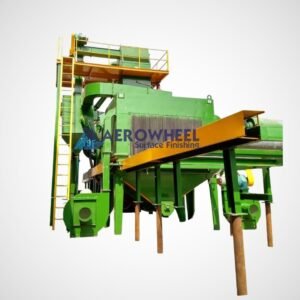
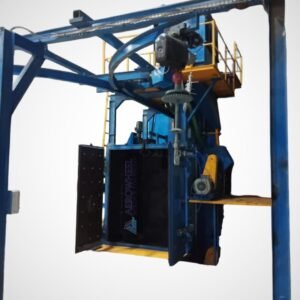
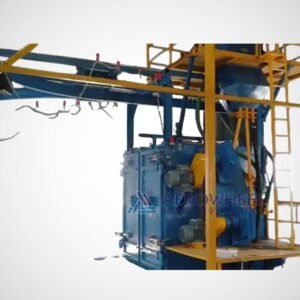
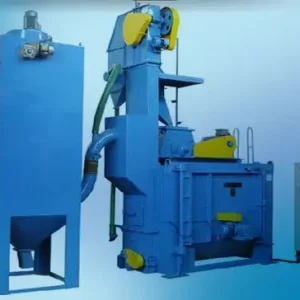
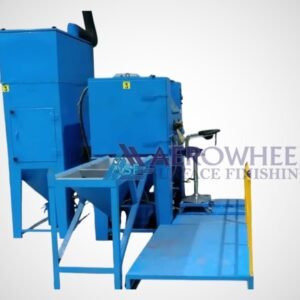
Commonly incorporated in heavy-duty shot blasting machines, this method uses high-speed bladed turbine wheels to propel massive volumes of spherical shot. It provides high operational throughput for automotive suspension springs, crankshafts, and heavy structural beams.
3. Rotary Flap Peening
Flapper peening utilizes flexible, shot-embedded flaps attached to a motorized rotating mandrel. As the shaft spins, the flaps repeatedly peen the surface. Technicians prefer this portable approach for precision aerospace maintenance and on-site localized field repairs.
4. Advanced Laser Peening
Laser shock peening uses high-energy pulsed laser beams directed at a water-tamped metal surface to generate high-amplitude shockwaves. This produces compressive stress depths significantly deeper than traditional mechanical methods for safety-critical aviation parts.
COOKWARE BLAST CLEANING PRIOR TO TEFLON COATING
Applications of Wet Blast Cabinets in Precision Industries
Profiles of Top Shot Blasting Machine Manufacturers
Shot Peening Media Types
The selection of peening media directly affects surface roughness, dimple geometry, and final fatigue performance:
- Cast Steel Shot: Tough, uniform, and durable; ideal for heavy automotive forgings, connecting rods, and transmission shafts.
- Conditioned Cut Wire Shot: High-density carbon or stainless steel wire segments rounded into spheres; provides consistent hardness and resists premature breakdown.
- Ceramic Beads: Chemically inert with exceptional impact resistance; ideal for non-ferrous alloys, titanium airframes, and medical implants.
- Glass Bead Shot: Produces a satin finish without removing parent metal, commonly chosen for stainless steel and aluminum structural parts.
Shot Peening vs. Shot Blasting: Key Differences
While both methods utilize abrasive media propelled at high velocity, their industrial objectives, media selection, and structural outcomes differ completely.
| Feature / Parameter | Shot Peening | Shot Blasting |
| Primary Objective | Induce residual compressive stress to enhance fatigue life | Surface cleaning, rust/scale removal, and paint adhesion profile |
| Media Shape | Strictly spherical, smooth, and crack-free particles | Angular grits, crushed shot, or irregular media |
| Material Impact | Pure plastic deformation; zero material removal | Abrasive erosion and mechanical surface micro-cutting |
| Process Control | Highly calibrated (Almen intensity, arc height, coverage %) | Standardized based on visual surface cleanliness (SA 2.5, SA 3) |
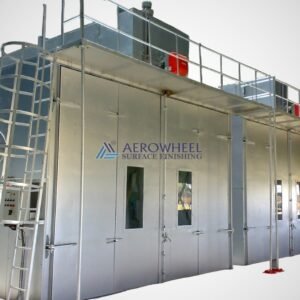
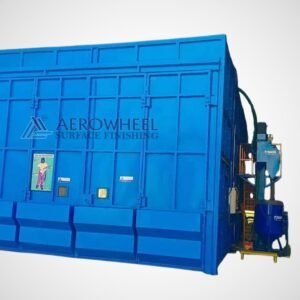
| Typical Equipment | Dedicated CNC automated shot peening chambers | Blast cabinets, tumblast units, and industrial blast rooms |
Key Industrial Applications
A uniform shot peened surface delivers vital mechanical advantages across dynamic operating environments:
- Aerospace: Jet engine turbine blades, aircraft landing gear cylinders, structural wing spars, and helicopter rotor hubs subjected to cyclic turbulence.
- Automotive: Coil and leaf springs, transmission drive gears, crankshafts, camshafts, and steering knuckles to prevent fatigue failure under torque.
- Energy & Oil Refining: Drill strings, deep-sea risers, impeller shafts, and heat exchanger tubes exposed to stress corrosion cracking (SCC).
- Medical Equipment: Orthopedic titanium bone plates, hip joint replacements, and surgical implants requiring maximum biocompatibility and cycle endurance.
Frequently Asked Questions (FAQs)
What is the primary benefit of a shot peened surface?
A shot peened surface features a uniform layer of residual compressive stress. This layer inhibits surface tensile cracking, retards stress corrosion cracking (SCC), and extends the operational fatigue lifespan of metal components under cyclic load.
Can shot peening replace heat treatment?
No. Heat treatment alters the bulk metallurgical structure and core hardness of an entire component. In contrast, shot peening modifies only the near-surface layer (typically 0.1 mm to 1 mm deep) to optimize fatigue resistance. The two processes complement each other in precision manufacturing.
How is shot peening intensity measured?
Shot peening intensity is measured using standardized Almen strips (A, N, or C strips). After exposure to the blast stream, the strip curves into an arc due to induced compressive stresses. An Almen gauge measures this arc height to confirm the exact energy and intensity of the media stream.