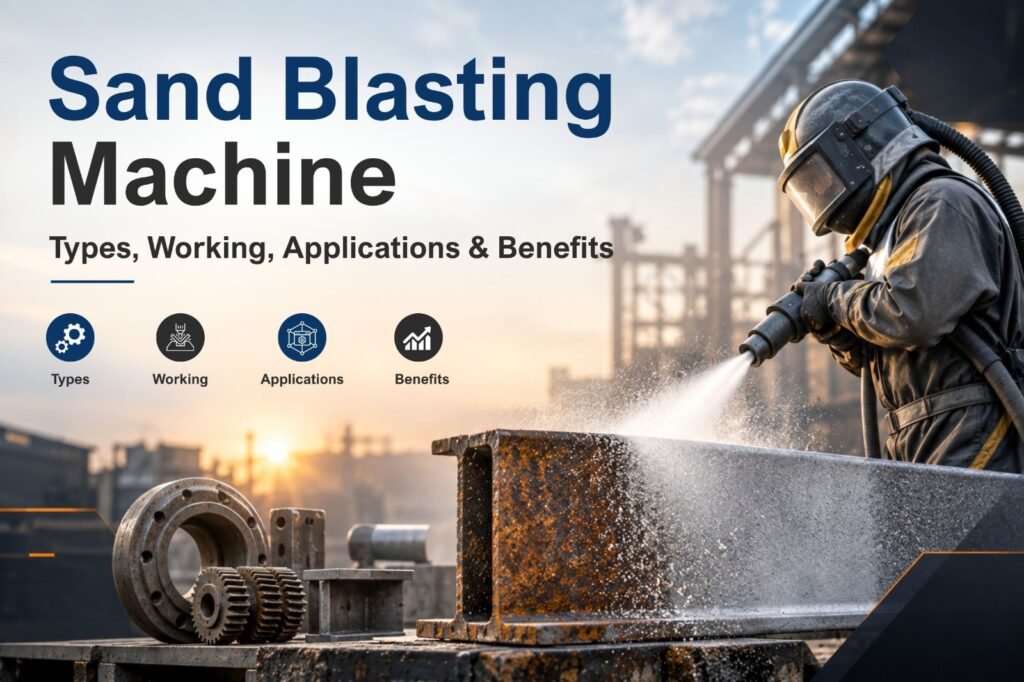




Rust, old paint, scale, and stubborn contamination are the biggest enemies of a clean, long-lasting metal finish. A sand blasting machine solves this problem by firing abrasive particles at high speed to strip surfaces down to bare metal in minutes instead of hours. Whether you run a small fabrication workshop or a heavy engineering plant, understanding how this equipment works helps you choose the right setup for consistent, high-quality surface preparation.
What Is a Sand Blasting Machine?
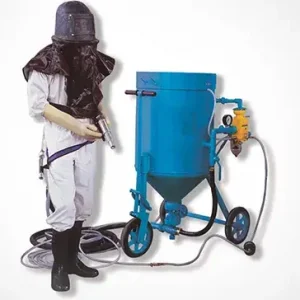
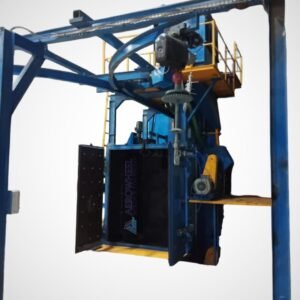
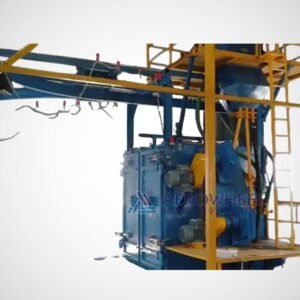
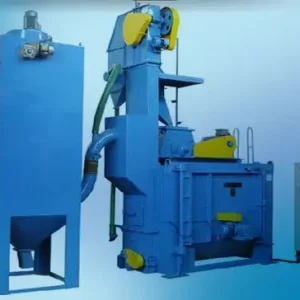
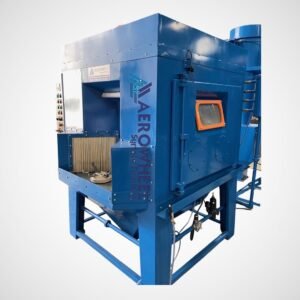
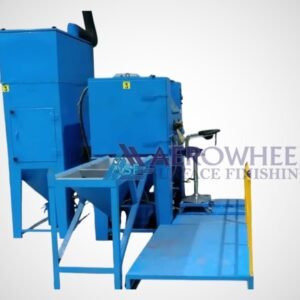
A sand blasting machine is industrial equipment that propels abrasive media — sand, steel grit, or glass beads — onto a metal or concrete surface using compressed air or a centrifugal wheel. The impact removes rust, scale, old coatings, and contaminants, leaving a clean, slightly roughened surface that’s ideal for painting, coating, or welding. Aerowheel’s range of sand blasting machines is built for exactly this kind of heavy-duty surface cleaning.
How Does a Sand Blasting Machine Work?
The process is straightforward but relies on a few coordinated components working together:
- Abrasive storage – Media is loaded into a pressure vessel or a suction hopper.
- Compressed air supply – An air compressor for sandblasting generates the pressure needed to move abrasive through the hose.
- Nozzle acceleration – Air and abrasive mix and exit through a nozzle at high velocity.
- Impact and cleaning – The abrasive strikes the surface, removing rust, paint, and debris.
- Recovery – In enclosed cabinets or blast rooms, used abrasive is collected, filtered, and reused.
The efficiency of this cycle depends heavily on air volume and pressure, which is why compressor sizing is one of the most important decisions when setting up a blasting line.
Types of Sand Blasting Machines
Different jobs call for different machine configurations:
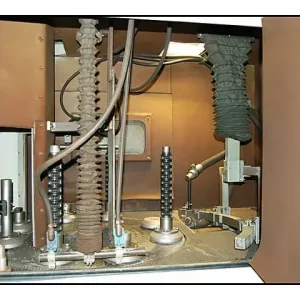
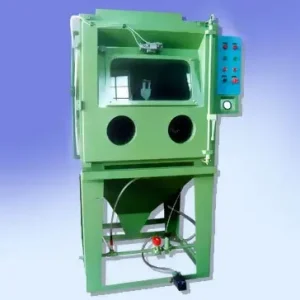
- Pressure blast cabinets – Deliver higher blasting force for thick coatings and heavy rust; ideal for foundries and heavy fabrication. See Aerowheel’s pressure blast cabinet range.
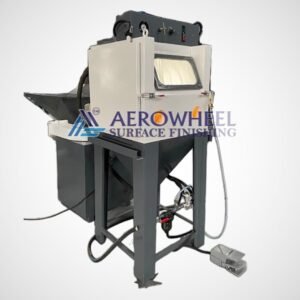
- Suction/vacuum blast cabinets – Draw abrasive using air-stream suction; simpler and more economical for lighter cleaning tasks. Explore suction vacuum blast cabinets.
- Abrasive blasting cabinets – General-purpose enclosed units for small components and precision parts. Check out abrasive blasting cabinets.
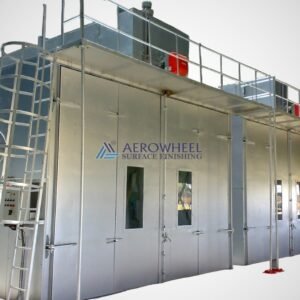
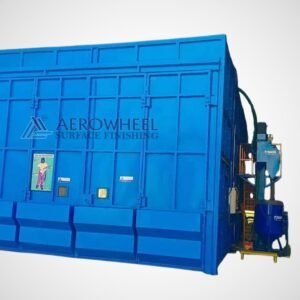
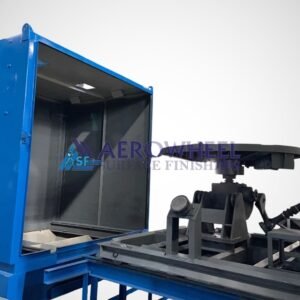
- Blast rooms – Large, walk-in enclosures for big fabrications like structural steel and railway components. Learn more about blast room systems.
Sand Blasting Machine With Compressor: Why It Matters
A sand blasting machine with compressor is a matched system rather than two separate purchases. Undersized compressors cause pressure drops, uneven cleaning, and slower cycle times, while an oversized one wastes energy. Matching CFM (cubic feet per minute) and PSI output to your nozzle size and abrasive type keeps blasting consistent and reduces abrasive and power consumption over time.
Automatic Sandblasting Machine: The Shift Toward Automation
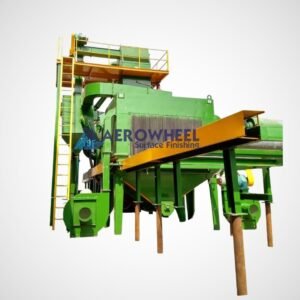
An automatic sandblasting machine reduces manual handling by using programmable nozzle movement, conveyorized part feeding, and automated abrasive recovery. This is especially valuable for repetitive, high-volume jobs such as automotive components, tyre mould cleaning, or structural parts. Automation improves consistency, cuts abrasive wastage, and reduces operator exposure to dust — read more in our comparison of automatic vs manual shot blasting machines.
Applications of Sand Blasting Machines
- Removing rust and scale before painting or powder coating
- Preparing steel structures, pipelines, and tanks for coating
- Cleaning castings, forgings, and welded components
- Restoring automotive parts and machinery
- Surface texturing before adhesive bonding
Benefits of Using a Sand Blasting Machine
- Faster cleaning compared to manual scraping or chemical stripping
- Better coating adhesion due to a properly profiled surface
- Lower long-term cost through abrasive recovery and reuse
- Versatility across metals, plastics, and concrete
- Improved safety when used in enclosed cabinets or blast rooms with proper ventilation
Conclusion
A sand blasting machine is only as good as the system behind it — the compressor, the cabinet design, and the level of automation all affect output quality and cost. Aerowheel manufactures a complete range of sand blasting machines, blast cabinets, and blast rooms engineered for Indian industrial conditions. Explore our full product range or get in touch to find the right blasting setup for your operation.
How Shot Blasting Works and Why You Need It
Portable vs Cabinet Type Sand Blasting Machines
Shot Blasting vs. Sand Blasting: Key Differences
Frequently Asked Questions
Q1: What size air compressor do I need for sandblasting?
It depends on your nozzle diameter and blasting pressure — smaller nozzles typically need 20–50 CFM, while larger production setups may require well over 100 CFM.
Q2: Can a sand blasting machine be automated?
Yes. Automatic sandblasting machines use programmable controls and conveyor systems for consistent, high-volume cleaning with less manual effort.
Q3: How do I choose between a suction and pressure blast cabinet?
Suction cabinets suit light, occasional use, while pressure cabinets are better for heavy coatings and continuous industrial work.