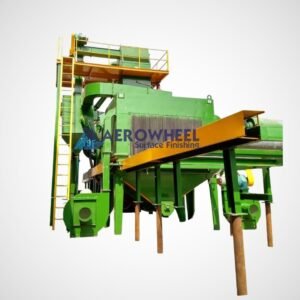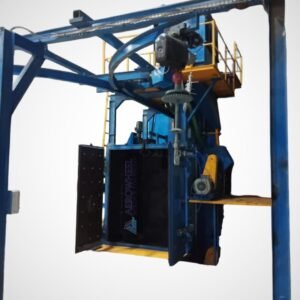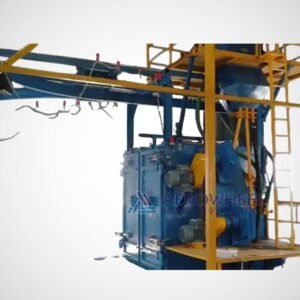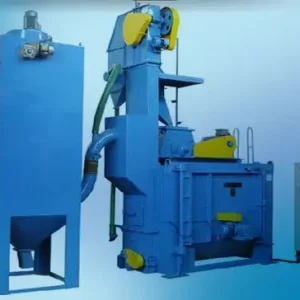




The manufacturing industry is rapidly evolving with the adoption of Industry 4.0, smart factories, and advanced automation technologies. Companies are continuously looking for ways to improve productivity, reduce production costs, and maintain consistent product quality. As a result, rotary indexing machines have become more intelligent, efficient, and flexible than ever before.
Modern rotary indexing machines are no longer limited to simple mechanical indexing. Today, they incorporate advanced automation features such as PLC controls, robotic integration, vision inspection systems, IoT connectivity, and real-time production monitoring. These innovations are transforming manufacturing processes across industries.
At Aerowheel Surface Finishing, we develop rotary indexing solutions that combine precision engineering with modern automation technologies to help manufacturers stay competitive in today’s fast-changing industrial landscape.
Why Automation Is Transforming Rotary Indexing Machines
Traditional production methods often depend on manual handling, which can lead to slower production, inconsistent quality, and higher labour costs. Modern automation eliminates these challenges by making manufacturing processes faster, smarter, and more reliable.
Automated rotary indexing systems help manufacturers:
- Increase production speed
- Improve process accuracy
- Reduce manual intervention
- Minimize production errors
- Maintain consistent product quality
As production demands continue to grow, automation has become a necessity rather than a luxury.
PLC-Based Intelligent Control Systems
One of the biggest advancements in rotary indexing machines is the use of Programmable Logic Controllers (PLCs).
PLC systems provide:
- Automatic process control
- Accurate indexing movement
- Easy machine programming
- Real-time production monitoring
- Faster troubleshooting
Operators can easily adjust machine parameters through user-friendly Human Machine Interface (HMI) panels, making production more flexible and efficient.
Robotic Integration
Modern rotary indexing machines are increasingly being integrated with industrial robots.
Robots can automate tasks such as:
- Component loading
- Unloading finished products
- Pick-and-place operations
- Material handling
- Sorting and packaging
This reduces manual labour while improving production speed and accuracy.
Machine Vision Inspection Systems
Quality control has become a major focus in automated manufacturing.
Vision inspection systems use high-resolution cameras and intelligent software to inspect components during production.
These systems can automatically detect:
- Dimensional errors
- Missing components
- Incorrect assembly
- Surface defects
- Positioning errors
Real-time inspection improves product quality while reducing manual inspection requirements.
IoT and Smart Factory Connectivity
The Industrial Internet of Things (IoT) is changing how manufacturers monitor production equipment.
Modern rotary indexing machines can collect and share real-time data such as:
- Production output
- Machine performance
- Cycle times
- Equipment status
- Maintenance alerts
This allows production managers to monitor operations remotely and make data-driven decisions that improve efficiency.
Predictive Maintenance Technology
Instead of waiting for machine failures, manufacturers are adopting predictive maintenance systems.
Using sensors and machine monitoring, rotary indexing machines can detect early signs of wear or malfunction.
Benefits include:
- Reduced unexpected downtime
- Lower maintenance costs
- Longer machine life
- Improved production planning
Predictive maintenance helps manufacturers avoid costly production interruptions.
Servo-Driven Indexing Systems
Many modern rotary indexing machines now use servo motors instead of conventional mechanical drives.
Servo-driven systems offer:
Best Shot Blasting Machines for Medium-Scale Fabricators
Sand Blasting PPE Guide – What Operators Must Wear
Enhancing Productivity with Automatic Shot Blasting Machines
- Higher positioning accuracy
- Faster indexing
- Smooth movement
- Better repeatability
- Lower energy consumption
This technology is particularly beneficial for industries requiring high precision.
Flexible Manufacturing Solutions
Today’s manufacturers often produce multiple products on the same production line.
Modern rotary indexing machines allow:
- Quick changeovers
- Adjustable production programs
- Multiple product configurations
- Reduced setup time
This flexibility enables businesses to respond quickly to changing market demands.
Energy-Efficient Automation
Energy efficiency has become a major priority for manufacturing companies.
Modern rotary indexing machines are designed with:
- Energy-efficient motors
- Optimized control systems
- Smart power management
- Reduced idle energy consumption
These features help lower operating costs while supporting sustainable manufacturing practices.
Advanced Safety Features
Automation has also improved workplace safety.
Modern rotary indexing machines include:
- Safety interlocks
- Emergency stop systems
- Light curtains
- Safety sensors
- Operator protection systems
These features create a safer working environment while maintaining high productivity.
Industries Driving Automation Adoption
Advanced rotary indexing machines are widely used in:
- Automotive manufacturing
- Electrical and electronics
- Medical device production
- Aerospace engineering
- Consumer goods manufacturing
- Industrial equipment manufacturing
These industries require high-speed production with exceptional accuracy and reliability.
Future of Rotary Indexing Machine Automation
The future of rotary indexing machines is moving toward fully connected and intelligent manufacturing systems.
Emerging trends include:
- Artificial Intelligence (AI)-assisted process optimization
- Digital twin technology
- Cloud-based production monitoring
- Autonomous quality inspection
- Collaborative robot (cobot) integration
- Advanced production analytics
These technologies will further improve efficiency, flexibility, and manufacturing intelligence.
Aerowheel Surface Finishing’s Automation Solutions
At Aerowheel Surface Finishing, we continuously integrate modern automation technologies into our rotary indexing machines to help customers improve productivity and stay ahead of industry demands.
Our solutions include:
- PLC-based automation
- Servo-driven indexing systems
- Customized workstation layouts
- High-precision engineering
- Easy integration with robotic systems
- Reliable after-sales support
We focus on building automation solutions that deliver consistent quality, maximum productivity, and long-term operational reliability.
Final Thoughts
Automation is redefining the capabilities of rotary indexing machines. From PLC controls and robotic integration to smart monitoring and predictive maintenance, today’s systems are designed to meet the growing demands of modern manufacturing.
Businesses that invest in advanced rotary indexing automation benefit from faster production, improved product quality, lower operating costs, and greater manufacturing flexibility.
If you’re planning to modernize your production line, Aerowheel Surface Finishing offers intelligent rotary indexing machine solutions that combine precision engineering with the latest automation technologies.