



Surface preparation is one of the most important steps in manufacturing, restoration, and finishing processes. While dry abrasive blasting is widely used for heavy-duty cleaning, some applications require a gentler and more precise method that produces a smoother finish with minimal dust. This is where a Wet Blast Cabinet becomes the ideal solution.
A wet blast cabinet combines abrasive media with water to create a controlled slurry that cleans and finishes surfaces without causing excessive abrasion. It is widely used in industries where component accuracy, surface quality, and cleanliness are critical.
At Aerowheel Surface Finishing, we provide advanced wet blasting solutions designed to deliver superior surface finishing while improving workplace safety and operational efficiency.
What Is a Wet Blast Cabinet?
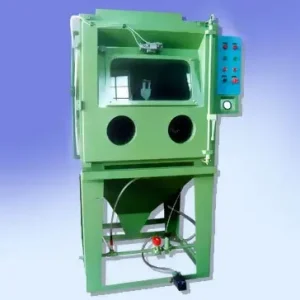
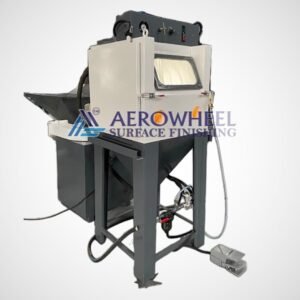
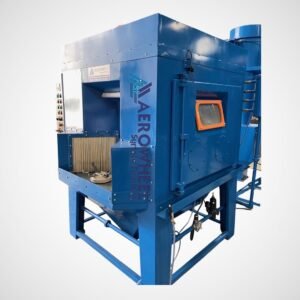
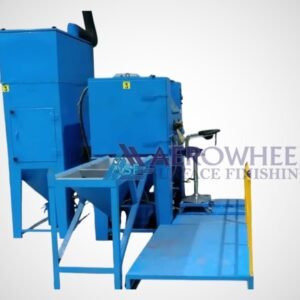
A wet blast cabinet is an enclosed surface treatment system that uses a mixture of water and abrasive media to clean, polish, or finish components.
Unlike conventional dry blasting, where abrasive particles strike the surface in a dry stream, wet blasting creates a slurry. This slurry is propelled through a blast nozzle using compressed air, producing a controlled cleaning action with significantly less dust.
The presence of water cushions the abrasive particles, making the process gentler on delicate surfaces while still delivering excellent cleaning performance.
How Does a Wet Blast Cabinet Work?
The working process of a wet blast cabinet is simple but highly effective.
Step 1: Preparing the Slurry
Water and abrasive media are mixed inside the machine to create a uniform slurry.
Step 2: Loading the Component
The workpiece is placed inside the enclosed cabinet, ensuring a safe and controlled working environment.
Step 3: Blasting Process
Compressed air propels the water-abrasive slurry through a blast nozzle. The slurry removes contaminants, oxidation, machining marks, and other surface impurities while producing a smooth, even finish.
Step 4: Slurry Collection and Recirculation
After blasting, the slurry is collected, filtered, and recirculated, allowing efficient use of abrasive media while reducing waste.
When Should You Use a Wet Blast Cabinet?
Wet blasting is the preferred choice when surface finish and component protection are more important than aggressive material removal.
It is commonly used when:
- Delicate components need cleaning without damage
- A smooth satin or matte finish is required
- Dust generation must be minimized
- Precision parts require controlled surface treatment
- Surface contamination needs to be removed without altering dimensions
For applications involving heavy rust, thick scale, or large amounts of paint removal, dry blasting may be a more suitable option.
Benefits of Using a Wet Blast Cabinet
Superior Surface Finish
Wet blasting produces a smooth, uniform surface without leaving the rough profile often associated with dry blasting.
This makes it ideal for components that require high-quality cosmetic or functional finishes.
Minimal Dust Generation
Because water captures airborne abrasive particles, wet blasting generates very little dust.
This provides:
- Cleaner working conditions
- Improved operator visibility
- Better workplace safety
- Reduced environmental contamination
Reduced Surface Damage
The water cushions the impact of abrasive media, reducing the risk of:
Shot Peening Process: Types, Working Principles, and Applications
Emerging Trends in Shot Blasting Machines: Insights from Leading Manufacturers in India
The Complete Guide to Sand Blasting Machines
- Surface erosion
- Warping
- Excessive material removal
This makes wet blasting suitable for delicate and precision-engineered components.
Excellent Cleaning Performance
Wet blast cabinets effectively remove:
- Oxidation
- Carbon deposits
- Light rust
- Machining marks
- Surface contaminants
- Old coatings
They clean complex shapes and intricate surfaces while preserving dimensional accuracy.
Longer Abrasive Media Life
Water reduces friction between abrasive particles, helping them maintain their effectiveness for longer periods.
This can lead to:
- Lower abrasive consumption
- Reduced operating costs
- Improved process efficiency
Better Preparation for Coating
A clean and uniform surface improves the adhesion of:
- Paint
- Powder coating
- Electroplating
- Surface treatments
This results in better coating performance and longer-lasting finishes.
Common Applications of Wet Blast Cabinets
Wet blast cabinets are widely used across various industries.
Automotive Industry
- Engine components
- Gearboxes
- Carburettors
- Aluminium wheels
- Restoration parts
Aerospace Industry
- Turbine blades
- Precision-machined parts
- Aircraft components
Medical Equipment Manufacturing
- Surgical instruments
- Stainless steel medical devices
- Implant components
Tool and Die Industry
- Mould cleaning
- Die maintenance
- Precision tooling
General Engineering
- Aluminium components
- Stainless steel parts
- Brass and copper components
- Precision machined products
Wet Blast Cabinet vs Dry Blast Cabinet
| Feature | Wet Blast Cabinet | Dry Blast Cabinet |
|---|---|---|
| Blasting Media | Water mixed with abrasive | Dry abrasive media |
| Dust Generation | Very low | Higher |
| Surface Finish | Smooth and satin finish | Rougher surface profile |
| Material Removal | Gentle and controlled | More aggressive |
| Best For | Precision parts and finishing | Heavy cleaning and surface preparation |
| Component Protection | Excellent | Moderate |
How to Choose the Right Wet Blast Cabinet
Before investing in a wet blast cabinet, consider:
- Type of material being processed
- Component size
- Required surface finish
- Production volume
- Abrasive media compatibility
- Water recycling system
- Ease of maintenance
- Automation requirements
Selecting the right system ensures maximum productivity and long-term performance.
Aerowheel Surface Finishing’s Wet Blasting Solutions
At Aerowheel Surface Finishing, we manufacture wet blast cabinets designed to meet the needs of modern industries.
Our solutions offer:
- Efficient slurry blasting technology
- Durable industrial construction
- Excellent dust control
- Consistent surface finishing
- Easy maintenance
- Reliable long-term performance
We work closely with customers to deliver customized wet blasting systems that match their production requirements.
Final Thoughts
A wet blast cabinet is an excellent choice for industries that require precise cleaning, superior surface finishing, and minimal dust generation. By combining water with abrasive media, it provides a gentle yet highly effective cleaning process that protects delicate components while improving surface quality.
Whether you’re working with automotive parts, aerospace components, medical devices, or precision-engineered products, a wet blast cabinet can enhance both product quality and production efficiency.
If you’re looking for reliable wet blasting solutions, Aerowheel Surface Finishing offers high-performance wet blast cabinets designed to deliver exceptional results across a wide range of industrial applications.