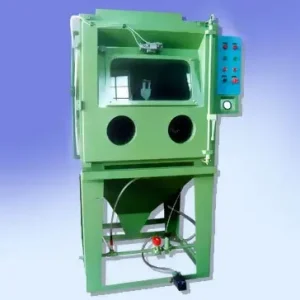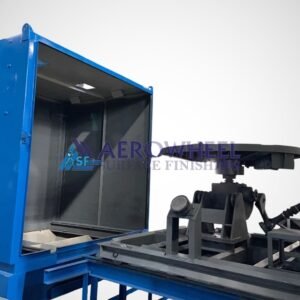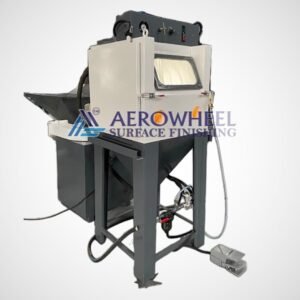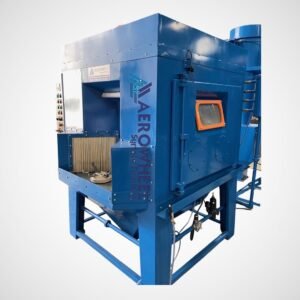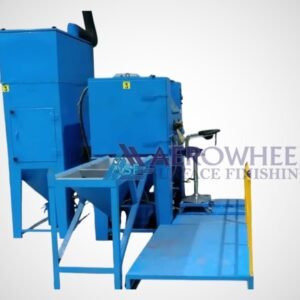




The automotive industry demands precision, durability, and high-quality surface finishing for every component — from engine parts and chassis frames to suspension systems and brake components. To ensure performance and longevity, these parts undergo a variety of surface preparation processes before coating, machining, or assembly. Sand blasting (abrasive blasting) has become one of the most essential steps in this workflow.
At Aerowheel Surface Finishing, we design sand blasting solutions tailored for automotive production, enabling manufacturers to achieve clean surfaces, perfect coating adhesion, and reduced rework. Below is a detailed look at the role of sand blasting in automotive component manufacturing.
1. Removing Rust, Scale, and Contaminants
Automotive components are exposed to:
- Heat
- Humidity
- Chemical fumes
- Manufacturing residues
This creates rust, scale, and surface impurities.
Sand blasting effectively removes:
- Mill scale from casting and forging
- Oxides from heat treatment
- Rust from storage and handling
- Oil, grease, and dirt layers
This ensures the metal surface is clean and ready for the next process.
2. Surface Preparation Before Coating
Paint, powder coating, and protective coatings are essential in automotive production to prevent corrosion and improve aesthetics.
Sand blasting creates an anchor profile, allowing coatings to bond mechanically with the metal.
Benefits:
- Strong adhesion
- Better coating thickness uniformity
- Reduced peeling or flaking
- Increased resistance to road conditions
From car bodies to tractor frames, sand blasting ensures coatings last longer.
3. Shot Peening for Strength Enhancement
In critical automotive parts like:
- Gears
- Springs
- Shafts
- Crankshafts
shot blasting is used for shot peening, which improves the fatigue strength of metal by inducing compressive stress on the surface.
This results in:
- Longer part life
- Higher resistance to cracking
- Better performance under load
Shot peening is widely used in engine, suspension, and transmission components.
4. Cleaning Castings and Forgings
Automotive parts such as:
- Brake housings
- Differential cases
- Engine blocks
- Suspension arms
are produced by casting or forging.
These parts have sand, scale, and slag on their surfaces. Sand blasting:
- Removes casting sand residue
- Cleans hot scale and slag
- Prepares the surface for machining
This improves dimensional precision and reduces machining effort.
5. Deburring and Finishing of Machined Parts
Machined automotive parts often have:
- Burrs
- Sharp edges
- Surface defects
Sand blasting smoothens these defects without damaging the part geometry.
Key Components and Technology of Airless Shot Blasting Machines
How Paint Booths Ensure Dust-Free, Smooth Finishing
Sand Blasting vs Shot Blasting: Which is Right for You?
Results:
- Safe handling and assembly
- Better surface finish
- Improved part longevity
This is especially useful for aluminum and stainless steel components used in modern vehicles.
6. Surface Treatment Before Assembly
Sand blasting ensures that components used in assembly lines are free from contamination, improving performance in engineering systems like:
- Fuel injection
- Brake calipers
- Steering systems
Clean surfaces ensure proper sealing, welding, and bonding between parts.
7. Environment-Friendly Surface Cleaning
Modern sand blasting systems:
- Use dust collectors to trap fine particles
- Support abrasive recycling
- Avoid silica sand and toxic chemicals
This makes blasting a safe and eco-friendly surface preparation method.
8. Consistency and Repeatability in Mass Production
Automotive manufacturers operate high-volume production lines. Sand blasting:
- Delivers uniform surface finish
- Reduces variability caused by manual cleaning
- Supports automated blasting lines
- Ensures quality consistency for thousands of parts per shift
This is crucial for meeting global automotive standards.
9. Preparing Surfaces for Heat Treatment Coatings
Parts treated with:
- Nitriding
- Carburizing
- Hard chrome coatings
require clean surfaces to ensure proper coating penetration. Sand blasting removes contaminants that can block heat treatment reactions, resulting in:
- Improved hardness
- Better wear resistance
10. Enhancing Aesthetic Finishes
Automotive components visible to the end user require attractive finishes.
Sand blasting can create:
- Satin finish
- Matte finish
- Uniform texture
This helps manufacturers achieve premium-quality visuals on parts like wheels, frames, and premium interior metals.
Common Components Blasted in Automotive Industry
- Chassis and frames
- Axles and hubs
- Engine blocks and heads
- Suspension parts
- Transmission parts
- Brackets and mounts
- Brake components
- Exhaust systems
From small precision parts to heavy vehicle structures, sand blasting is used everywhere.
Conclusion
Sand blasting plays a central role in automotive component manufacturing by ensuring clean surfaces, improved coating adhesion, enhanced durability, and higher part performance. It supports every stage — from casting to machining, finishing, and final assembly.
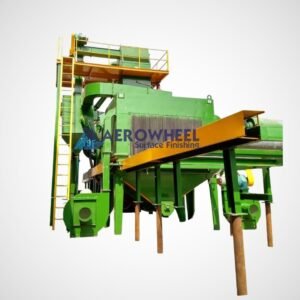
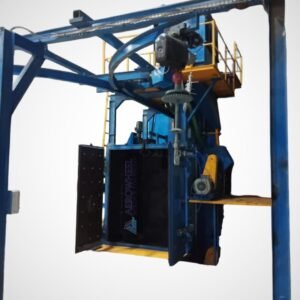
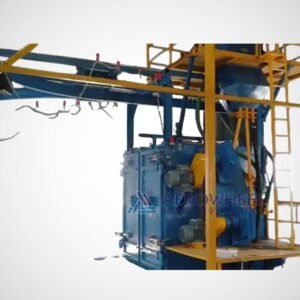
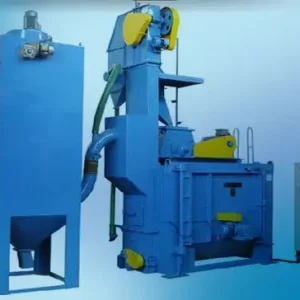
At Aerowheel Surface Finishing, we supply custom sand blasting machines, shot blasting systems, blast rooms, and dust collection setups tailored to automotive production lines. Whether you manufacture tractors, trucks, cars, or spare parts, we help you build a cleaner, safer, and more efficient finishing process.