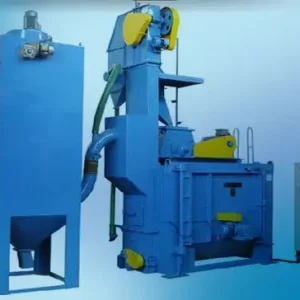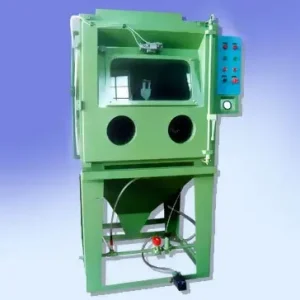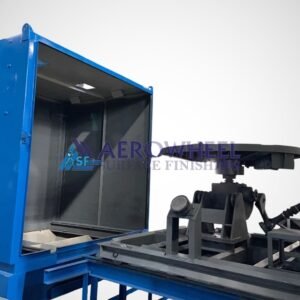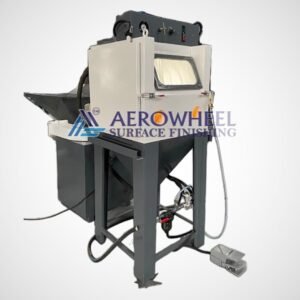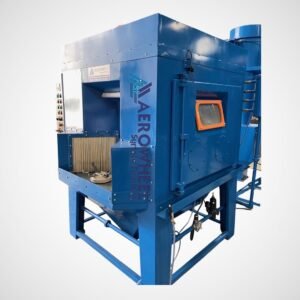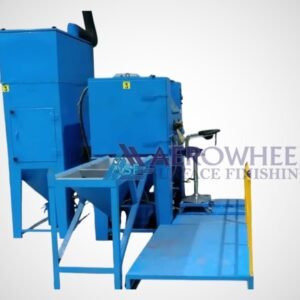




A shot blasting system is more than just a machine that throws abrasive media—it is a complete, engineered process designed to clean, strengthen, or prepare metal surfaces with maximum efficiency. Understanding the key components of a shot blasting system helps industries make informed decisions regarding performance, maintenance, and productivity.
At Aerowheel Surface Finishing, we design shot blasting systems that are reliable, durable, and optimized for Indian industrial conditions. Below is a clear breakdown of all the major parts that make up a modern shot blasting system.
1. Blasting Chamber
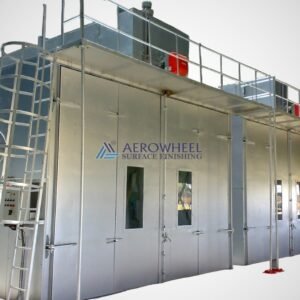
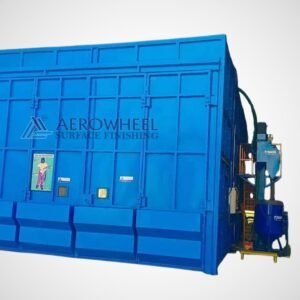
The blasting chamber is the main enclosure where the blasting process happens.
It is built using abrasion-resistant steel plates to withstand continuous impact from steel shots and grit.
Functions:
- Contains abrasive media during blasting
- Protects operators and the environment
- Provides a controlled blasting space
- Reduces noise and dust leakage
The chamber size depends on the component size and production volume.
2. Blast Wheel or Nozzle System
There are two types of blasting mechanisms:
a. Wheel Blasting (Turbine Blasting)
Used in automatic shot blasting machines, where a turbine wheel rotates at high speed and throws abrasive media onto the surface.
Benefits:
- Very high output
- Uniform blasting coverage
- Ideal for mass production
b. Air Blasting
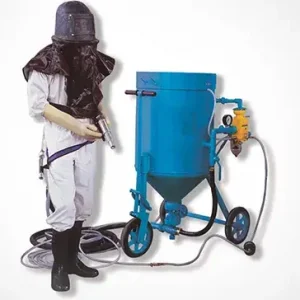
Uses compressed air and a blasting nozzle to direct abrasive particles.
This is more common in manual blasting machines and blast rooms.
Benefits:
- Flexible operation
- Suitable for complex shapes
- Good for job-based work
3. Abrasive Media Feeding System
The system stores and feeds abrasive media (steel shot, grit, etc.) to the wheel or nozzle at a consistent rate.
Components include:
- Abrasive hopper
- Metering valve
- Flow control system
Accurate flow control ensures uniform surface finish and prevents wastage.
4. Abrasive Recovery System
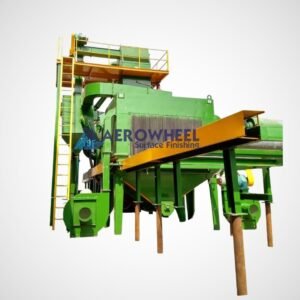
After blasting, the abrasive falls to the bottom of the chamber. The recovery system collects, cleans, and recycles the usable media.
There are three types of recovery systems:
- Full floor recovery
- Partial floor recovery
- Bucket elevator with screw conveyors
Process:
- Abrasive is collected by conveyors
- Lifted by bucket elevator
- Cleaned in air wash separator
- Stored back in the hopper for reuse
A good recovery system reduces abrasive consumption by 90–95%.
5. Air Wash Separator
This is a critical component of the recycling process.
What it does:
- Separates reusable abrasive from dust
- Removes broken shots and contaminants
- Ensures only clean abrasive returns to the system
The separator helps maintain consistent blasting performance.
Types of Shot Blasting Media and Their Industrial Applications
The Role of Sand Blasting in Pipeline Maintenance
How Wet Blasting Reduces Dust and Improves Operator Safety
6. Dust Collector System
Shot blasting creates dust and fine particles.
To keep the environment clean and safe, a dust collector is installed.
Types used:
- Cartridge filter dust collectors
- Cyclone separators
- Bag filter dust collectors
Function:
- Extract dust from the chamber
- Improve visibility
- Maintain healthy air quality
- Ensure compliance with pollution norms
A good dust collector is essential for operator safety.
7. Material Handling System
To move parts through the blasting chamber, different material handling systems are used depending on the machine type:
Common systems include:
- Roller conveyor
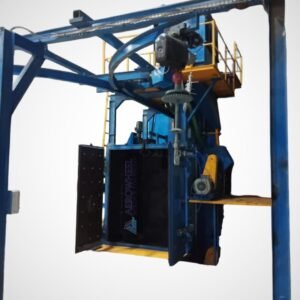
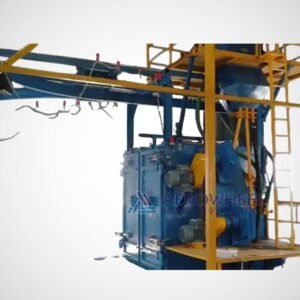
- Hanger type rotary system
- Turntable or rotary table
- Monorail or trolley system
These systems ensure smooth component movement and consistent exposure to abrasive streams.
8. Control Panel and Automation
The control panel acts as the brain of the shot blasting system.
Features include:
- Control over wheel/nozzle speed
- Timer settings
- Abrasive flow rate control
- Machine diagnostics
- Safety interlocks
Modern systems can also include IoT-based automation, remote monitoring, and data logging.
9. Liners and Wear Plates
Because the blasting chamber constantly faces abrasive impact, it is lined with manganese steel, rubber sheets, or wear plates.
Purpose:
- Protect machine structure
- Reduce maintenance
- Extend machine life
High-quality liners ensure long-term reliability.
10. Safety Systems
Safety features are integrated throughout the machine:
- Safety doors with interlocks
- Emergency stop button
- Overload protection
- Pressure monitoring
- Operator PPE systems
These ensure safe operation and protect workers from hazards.
Conclusion
A shot blasting system is a combination of several vital components—each performing a specific role to ensure the process is efficient, safe, and economical. From the blasting chamber and abrasive recovery system to dust collectors and automation controls, every part contributes to achieving clean, uniform, and prepared surfaces.
At Aerowheel Surface Finishing, we build machines where all components are designed to work seamlessly together. This results in high performance, low maintenance needs, and maximum productivity for industries across India.