



Paint wastage is one of the biggest hidden costs in industrial painting. Many manufacturing units lose a significant amount of paint due to overspray, poor airflow, rework, and uncontrolled painting conditions. While this wastage may not be obvious daily, it adds up to major financial loss over time.
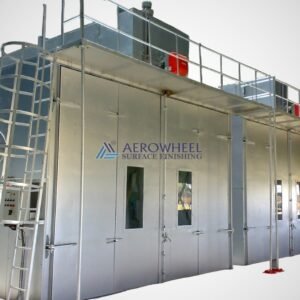
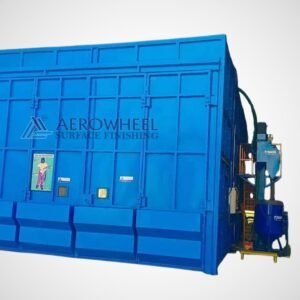
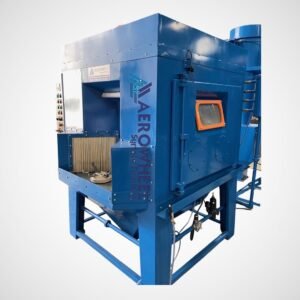
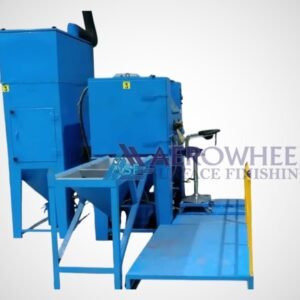
A well-designed paint spray booth plays a key role in reducing paint wastage while improving finish quality and process efficiency. At Aerowheel Surface Finishing, we help industries optimize spray booth systems to ensure maximum paint utilization with minimum waste.
Why Paint Wastage Happens in Industrial Painting
Paint wastage mainly occurs when paint does not land on the surface it is intended for. In open or poorly controlled painting environments, overspray spreads freely, paint particles float in the air, and a large portion of material is lost before it can form a coating.
Uneven airflow, poor lighting, incorrect spray patterns, and rework due to defects further increase paint consumption.
Controlled Airflow Keeps Paint Where It Belongs
One of the biggest advantages of a spray booth is controlled airflow. Proper airflow design ensures that paint particles move directly from the spray gun to the surface without drifting away.
When airflow is stable and balanced, overspray is pulled away from the surface immediately instead of floating inside the booth. This means more paint sticks to the product and less paint is wasted in the air.
Overspray Capture Prevents Paint Loss
In a spray booth, overspray is captured by exhaust filters before it can spread around the workspace. This controlled capture prevents paint from settling on walls, floors, equipment, or other components.
By managing overspray efficiently, spray booths significantly reduce unnecessary paint loss and keep the work area clean.
Uniform Coating Reduces Rework
Poor paint quality often leads to sanding, repainting, or full re-coating. Every time a part is repainted, additional paint is consumed.
Spray booths provide a clean and stable environment that improves first-time paint quality. When coatings are applied evenly and defects are minimized, rework is reduced—and so is paint wastage.
Better Visibility Improves Spray Accuracy
Good lighting inside a spray booth allows operators to clearly see how much paint is being applied. This helps avoid over-coating and missed areas.
When painters can visually control coverage and thickness in real time, they apply only the required amount of paint, reducing unnecessary excess.
Consistent Spray Conditions Improve Transfer Efficiency
Transfer efficiency refers to how much paint sprayed actually reaches the surface. Spray booths improve transfer efficiency by eliminating air disturbances and stabilizing spray patterns.
This allows paint particles to land smoothly and evenly, ensuring maximum utilization of every spray pass.
Proper Filtration Supports Efficient Painting
Clean intake air prevents dust contamination, while exhaust filters maintain stable airflow. When filters are clean and properly selected, airflow remains consistent.
Common Challenges in Sand Blasting and How to Solve Them
Energy-Saving Tips for Shot Blasting Equipment
How to Choose a Sand Blasting Machine for Your Workshop
Stable airflow means predictable paint behavior, which helps operators control paint usage more accurately and reduces waste caused by poor booth performance.
Environmental Control Prevents Paint Loss
Temperature and humidity inside a spray booth affect how paint behaves. Poor environmental conditions cause paint to dry too fast, run, or fail to adhere properly—leading to repainting and extra paint usage.
Spray booths maintain stable conditions, ensuring paint performs as expected and reducing material loss.
Standardized Process Reduces Variation
Spray booths allow painting to follow a repeatable process. When each job is painted under the same conditions, results become predictable.
This consistency reduces guesswork, minimizes mistakes, and prevents excessive paint application caused by trial-and-error methods.
Aerowheel Surface Finishing’s Paint-Saving Approach
At Aerowheel Surface Finishing, our spray booth designs focus on:
- Optimized airflow and exhaust control
- High-efficiency overspray filtration
- Uniform lighting for accurate application
- Stable environmental conditions
- Easy maintenance for consistent performance
This approach helps industries reduce paint wastage while improving overall coating quality.
Final Thoughts
Reducing paint wastage is not about using less paint—it’s about using paint correctly. A properly designed paint spray booth ensures that more paint reaches the surface, fewer defects occur, and less rework is needed.
By controlling airflow, overspray, visibility, and environmental conditions, spray booths help industries save paint, reduce costs, and improve efficiency.
For manufacturers looking to control expenses and achieve consistent results, investing in a spray booth is one of the smartest decisions.
If you want to reduce paint wastage and improve coating performance, Aerowheel Surface Finishing offers paint spray booth solutions designed for efficiency, quality, and long-term savings.