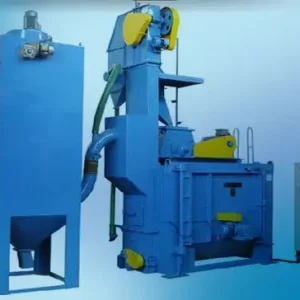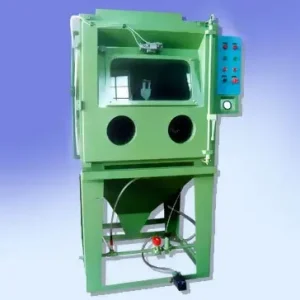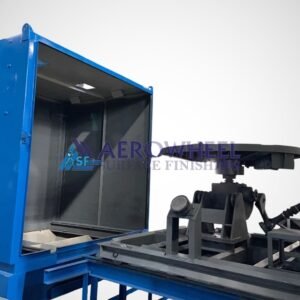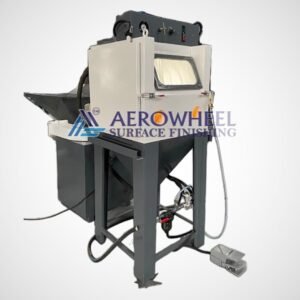




When designing or upgrading a blast room, one of the most important decisions is how to reclaim and recycle abrasive media efficiently. The two most common recovery options are floor recovery systems and overhead recovery systems. Both serve the same purpose—collecting and cleaning the used abrasive for reuse—but their designs and benefits differ.
In this article, Aerowheel Surface Finishing explains how these systems work, their pros and cons, and how to choose the best one for your needs.
1. Understanding Floor Recovery Systems
A floor recovery system is built directly into the blast room floor. It collects spent abrasive that falls during blasting and automatically transports it to a recovery unit using mechanical (screw conveyors or scrapers) or pneumatic systems.
Key Features:
- Floor trenches or hoppers with screw conveyors.
- Available as full-floor or partial-floor recovery systems.
- Ideal for heavy-duty blasting operations using steel grit or shot.
Advantages:
- Excellent for high-volume production environments.
- Provides efficient abrasive recycling and reduces manual cleanup.
- Seamlessly integrates with the blast room layout for smooth workflow.
Disadvantages:
- Requires a strong structural foundation and floor modification.
- Higher installation and maintenance costs compared to basic systems.
- Floor conveyors need regular maintenance to prevent clogging or wear.
2. Understanding Overhead Recovery Systems
An overhead recovery system uses an elevated or vertical mechanism—such as a bucket elevator, vacuum lift, or overhead conveyor—to transport the abrasive from the blast area to the separator or storage hopper.
Key Features:
- Abrasive collected from the floor is lifted vertically for cleaning.
- Keeps the blast room floor clear of embedded conveyors.
- Ideal when floor excavation is not possible or space is limited.
Advantages:
Common Shot Blasting Machine Problems and How to Fix Them
Future of Surface Preparation Technologies in India
Customer Support Services Offered by Shot Blasting Machine Manufacturers
- Easier to install in existing buildings (retrofit-friendly).
- Keeps the floor open and easy to clean.
- Lower initial setup cost when no floor modification is required.
Disadvantages:
- Less suitable for very heavy or high-volume abrasive operations.
- Requires taller ceilings and proper support structures.
- Maintenance of vertical lift systems can be more complex.
3. Floor vs Overhead Recovery – Key Comparison
| Feature | Floor Recovery | Overhead Recovery |
|---|---|---|
| Installation Cost | Higher (needs floor excavation) | Lower (minimal floor work) |
| Abrasive Volume Capacity | Excellent for heavy media | Moderate; not for high loads |
| Floor Space Use | Occupies part of the floor | Keeps floor clear |
| Maintenance | Floor conveyors need periodic care | Overhead parts need height access |
| Retrofitting | Difficult in existing buildings | Easier to retrofit |
| Durability | High for industrial use | Moderate, depends on load |
4. How to Choose the Right Recovery System
To decide which system suits your operation, consider:
- Type of abrasive used: Heavier abrasives like steel grit work better with floor systems.
- Production volume: For continuous or large-scale blasting, floor recovery ensures faster recycling.
- Facility layout: Limited floor modification? Choose overhead. Building a new setup? Floor recovery can be ideal.
- Budget and maintenance: If you need a low-cost, easy-to-maintain option, overhead systems offer flexibility.
- Future scalability: Floor recovery is better for long-term growth and automation compatibility.
5. Aerowheel Surface Finishing’s Expert Insight
At Aerowheel Surface Finishing, we’ve designed and installed both floor and overhead recovery systems for industries like automotive, rail, and heavy fabrication.
Our experts evaluate your workflow, space availability, abrasive type, and productivity goals to recommend a system that delivers maximum efficiency and long-term value.
Conclusion
Both floor recovery and overhead recovery systems play vital roles in modern blasting operations. The right choice depends on your specific needs, setup constraints, and production targets.
If you’re planning to install or upgrade your blast room, Aerowheel Surface Finishing can help you design the most efficient recovery solution that fits your budget and ensures years of reliable performance.