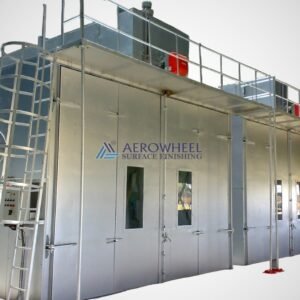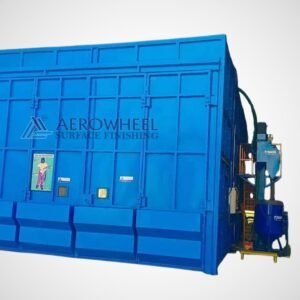




In industrial painting, paint defects are often blamed on paint quality or operator skill. But in reality, many recurring paint problems are caused by poor paint spray booth design. Even experienced painters cannot deliver consistent results if the booth does not provide proper airflow, ventilation, lighting, and environmental control.
At Aerowheel Surface Finishing, we frequently see paint defects disappear simply by correcting booth design issues. Let’s understand the most common paint defects caused by poorly designed spray booths—and why they happen.
Uneven Coating and Patchy Finish
One of the most common problems caused by poor booth design is uneven paint coverage. When airflow is unstable or unbalanced, paint particles do not settle uniformly on the surface.
This leads to patchy areas where some sections receive excess paint while others remain thin. Poor airflow direction and air turbulence are usually the root cause of this defect.
Dry Spray and Rough Texture
Dry spray occurs when paint particles partially dry before reaching the surface. This defect gives the coating a rough, sandpaper-like texture.
Poor booth design often creates excessive airflow speed or uncontrolled air movement. As a result, paint dries mid-air instead of flowing smoothly onto the surface.
Paint Runs and Sags
Runs and sags happen when too much paint accumulates in one area. This defect is commonly seen when airflow is weak or poorly directed.
In badly designed booths, overspray is not removed efficiently. Paint particles stay suspended in the air and settle back on the surface, causing paint to build up and flow downward under gravity.
Dust Contamination
Dust nibs and surface contamination are classic signs of poor booth filtration and sealing. If intake air is not properly filtered, dust enters the painting zone and settles on wet paint.
Gaps in booth panels, damaged filters, or poor intake filter placement allow contaminants to enter, resulting in visible defects after drying.
Orange Peel Effect
Orange peel gives the paint surface a texture similar to an orange skin. This defect often occurs due to improper airflow balance and poor temperature control.
In poorly designed booths, unstable air movement prevents paint from leveling properly, causing the coating to freeze in an uneven texture.
Blistering and Bubbling
Blistering happens when trapped moisture or solvents try to escape from beneath the paint film. Poor ventilation and humidity control are the main reasons behind this defect.
If the booth cannot remove moisture-laden air effectively, moisture gets trapped in the coating, leading to bubbles during drying or curing.
Poor Gloss and Dull Finish
A dull or inconsistent gloss finish is often caused by overspray settling back on the surface. This happens when exhaust systems are weak or incorrectly positioned.
Understanding Cross Draft, Down Draft & Side Draft Paint Booths
Advantages of Airless Shot Blasting Machines over Traditional Blasting Methods
How Shot Blasting Machines Work?
Instead of being removed, fine paint mist remains inside the booth and lands on freshly painted parts, reducing gloss and clarity.
Inconsistent Drying and Curing
Poor booth design results in uneven airflow and temperature variations. This causes some areas to dry faster than others.
Uneven drying leads to differences in coating hardness, appearance, and long-term durability—often noticed only after the product is in use.
Color Variation Between Parts
When booth conditions change from job to job, color appearance can vary even when the same paint is used. Poor lighting, airflow inconsistency, and environmental fluctuations are common reasons.
This is especially problematic in batch production where visual consistency is critical.
Why Booth Design Matters More Than You Think
Most paint defects are not random—they are predictable outcomes of poor booth design. Problems usually originate from:
- Improper airflow direction or speed
- Inadequate exhaust capacity
- Poor filtration
- Insufficient lighting
- Lack of temperature and humidity control
Correcting these design issues eliminates defects at the source rather than fixing them through rework.
Aerowheel Surface Finishing’s Design Philosophy
At Aerowheel Surface Finishing, we design paint spray booths with a focus on:
- Balanced airflow and exhaust systems
- High-efficiency filtration
- Proper lighting placement
- Stable temperature and humidity control
- Practical layouts suited to real production needs
Our approach helps industries achieve consistent, defect-free finishes while reducing rework and material loss.
Final Thoughts
Paint defects are expensive—not just in terms of paint, but also time, labor, and reputation. Many of these defects are directly linked to poor paint spray booth design rather than painting technique.
Investing in a well-designed paint spray booth prevents defects before they occur, ensuring better quality, higher productivity, and lower operating costs.
If your painting operation is struggling with recurring defects, Aerowheel Surface Finishing can help you identify and correct booth design issues for long-term improvement.