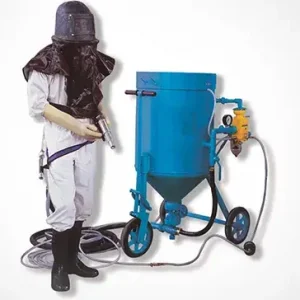




In structural steel fabrication, surface preparation is one of the most critical steps before welding, coating, galvanizing, or painting. Sand blasting (also known as abrasive blasting) ensures that steel surfaces are perfectly clean, roughened, and ready for long-lasting corrosion protection. For fabrication companies working with beams, columns, trusses, platforms, and heavy structures, sand blasting offers significant quality and performance advantages.
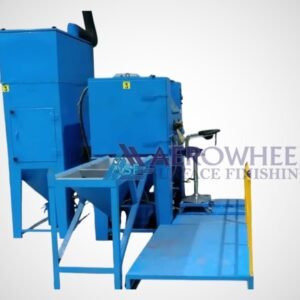
At Aerowheel Surface Finishing, we help steel fabricators achieve faster production cycles and premium surface finishes using advanced sand blasting and abrasive recovery systems. Below are the key benefits of sand blasting in structural steel fabrication.
1. Removes Rust, Mill Scale, and Contaminants Efficiently
Raw structural steel is often covered with:
- Rust (corrosion layers)
- Mill scale from rolling operations
- Oil, grease, and dirt from storage or handling
- Welding slag and surface defects
Chemical cleaning or manual grinding often fails to remove deep rust and heavy scale. Sand blasting uses high-velocity abrasive impact to completely strip the surface back to bare metal, exposing clean steel ready for finishing.
2. Creates an Ideal Anchor Profile for Coating
For coatings to perform well, steel surfaces must have a micro-roughness called an anchor pattern.
Sand blasting generates this rough texture, allowing paint, powder coating, or galvanizing layers to penetrate and lock onto the steel surface.
Benefits include:
- Strong mechanical bonding
- Uniform surface adhesion
- Reduced paint peeling and blistering
- Longer coating and corrosion protection life
This is especially important for steel used outdoors or in marine environments.
3. Improves Corrosion Resistance
The number one threat to structural steel is corrosion.
Sand blasting:
- Removes corrosion-promoting contaminants
- Provides a clean surface for anti-corrosion coatings
- Ensures coating thickness is uniform and solid
This increases the service life of structures used in buildings, bridges, oil tanks, towers, or industrial plants.
4. Delivers Uniform and Consistent Results
Manual cleaning methods (wire brushing, grinding) depend on operator skill and can leave uneven patches, resulting in coating defects.
Sand blasting ensures:
- Same finish across all surfaces
- No missed spots
- Precise control over surface profile (SA 2, SA 2.5, SA 3)
- Repeatable results for every batch
This consistency is essential when the steel fabrication project must meet inspection and quality standards.
5. Saves Time and Reduces Labor Costs
Compared to manual cleaning, sand blasting is:
- Faster
- Less labor-intensive
- Suitable for large steel structures
- Easily scalable
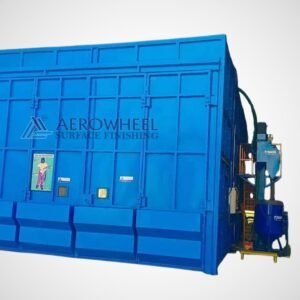
With a blast room or automatic blasting system, large beams and frames can be cleaned in minutes, supporting high-volume production schedules.
6. Essential for Welding and Galvanizing Preparation
Steel that is dirty or oxidized causes:
How Aerowheel Serves the Sand Blasting Market in Jodhpur
How to Control Dust and Improve Safety in Sand Blasting
Sand Blasting vs Acid Pickling – Which Is Better?
- Weak welds
- Weld porosity
- Poor galvanizing quality
Sand blasting cleans the surface and exposes clean metal, allowing deeper weld penetration and better zinc coating during galvanizing.
Fabricators gain:
- Stronger weld strength
- Better joint integrity
- No contaminants between weld layers
This results in safer structures that meet engineering requirements.
7. Compatible with All Types of Structural Steel
Sand blasting works effectively on:
- Mild steel
- Low alloy steel
- High tensile steel
- Fabricated assemblies
- Pre-engineered building (PEB) structures
From small brackets to entire warehouse frames, sand blasting ensures uniform preparation.
8. Supports International Quality Standards
For global projects, steel must meet recognized finishing standards such as:
- SA 2.5 (Near-White Metal Finish)
- SSPC and NACE standards
- ISO surface cleanliness grades
Sand blasting is the most efficient and globally accepted method to achieve these standards.
9. Allows Eco-Friendly Surface Cleaning
Modern sand blasting systems use:
- Closed-loop abrasive recovery
- Dust collectors for clean air
- Safe abrasives (steel grit, garnet, aluminum oxide)
No toxic chemicals are used, and abrasive can be reused multiple times, making it environment-friendly and economical.
Conclusion
For structural steel fabrication, sand blasting offers unmatched benefits — from superior surface cleaning and improved coating adhesion to faster production and long-term corrosion resistance. Whether you are manufacturing PEB structures, bridges, or heavy industrial components, sand blasting ensures your steel is prepared to deliver maximum durability and performance.
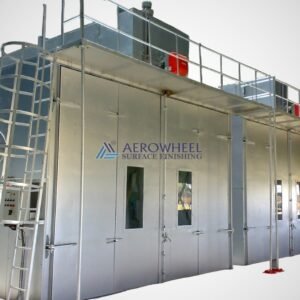
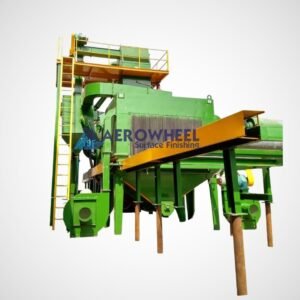
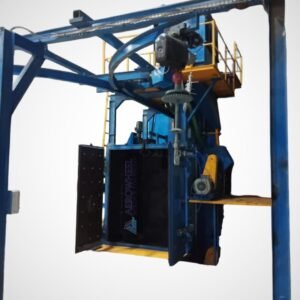
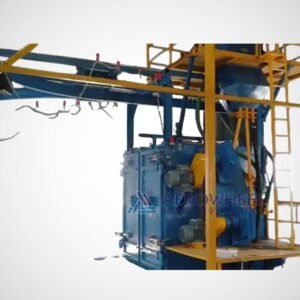
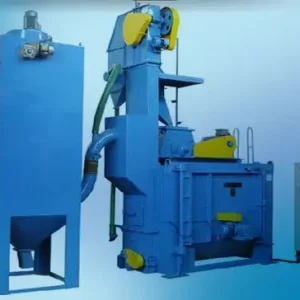
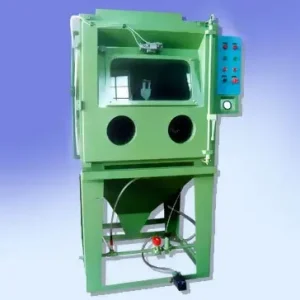
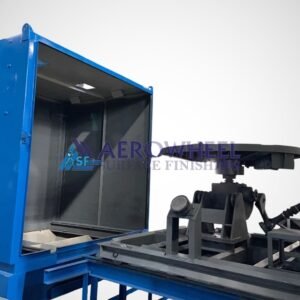
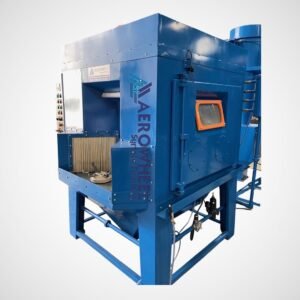
At Aerowheel Surface Finishing, we provide complete sand blasting solutions including blast rooms, recovery systems, dust collectors, and shot blasting machines tailored for heavy steel fabrication projects.