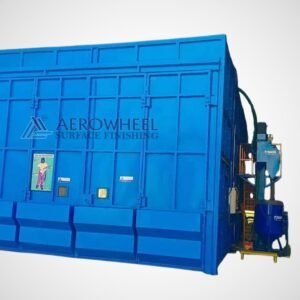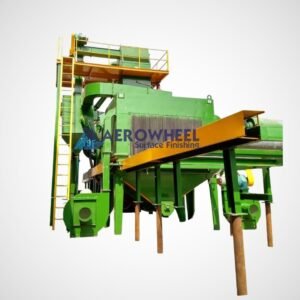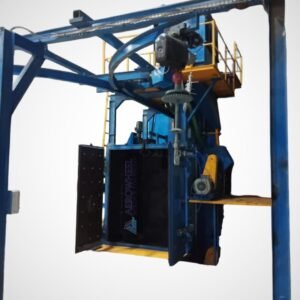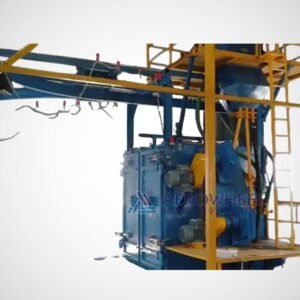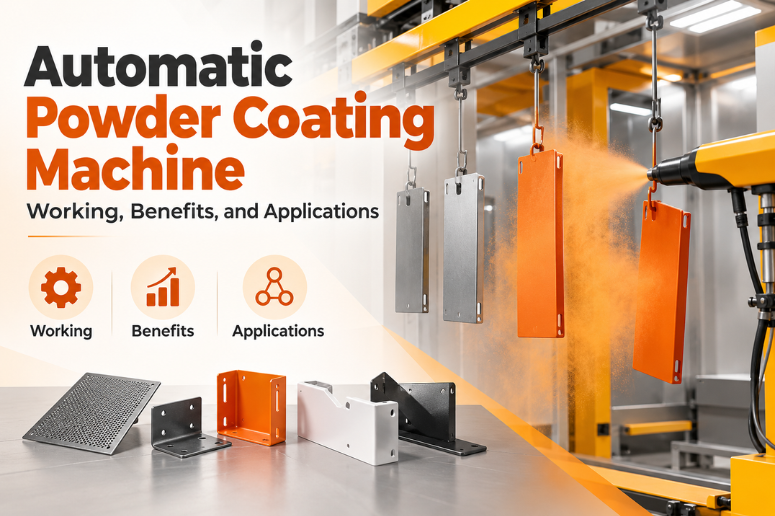




An automatic powder coating machine applies dry powder to metal parts with electrostatic spray guns on a conveyor, then cures it in an oven. It gives a uniform, durable finish with less waste and less manual labour than hand spraying.
What Is an Automatic Powder Coating Machine?
An automatic powder coating machine sprays powder paint onto parts without an operator holding the gun. Guns are mounted on reciprocators or robotic arms and spray parts as they move along a conveyor.
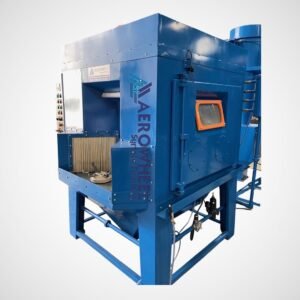
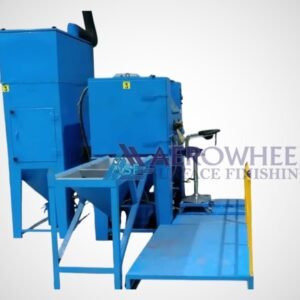
It is usually one part of a larger automatic powder coating system. The complete line typically includes pre-treatment, a coating booth, a curing oven and a powder recovery unit. Many manufacturers pair it with surface preparation equipment so coating bonds properly.
How Does an Automatic Powder Coating System Work?
The process runs in five steps:
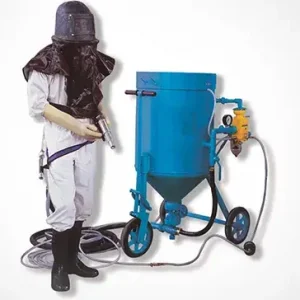
- Surface preparation: Parts are cleaned to remove rust, oil, scale and old paint. Blasting or chemical pre-treatment creates a surface the powder can grip.
- Loading: Parts hang on a conveyor or rack and move steadily toward the booth.
- Electrostatic spraying: Guns give the powder particles an electric charge. The grounded metal part attracts them, so powder wraps evenly around edges and curves.
- Powder recovery: Overspray is collected by a cyclone or filter system and reused. This cuts material waste sharply.
- Curing: The coated parts pass through an oven. Heat melts the powder, which flows and hardens into a smooth, tough film.
Sensors, PLC controls and gun triggers keep film thickness consistent from part to part.
Key Components of Industrial Powder Coating Equipment
Whatever the size of the plant, powder coating equipment usually has these parts:
- Pre-treatment unit: Cleans and prepares the metal.
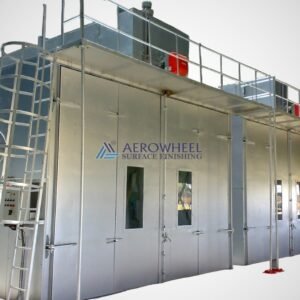
- Powder coating booth: Contains the spray and recovers overspray.
- Automatic spray guns: Mounted on reciprocators or robots for repeatable coverage.
- Conveyor system: Moves parts through every stage at a controlled speed.
- Curing oven: Heats the coating to the temperature the powder requires.
- Control panel: Manages speed, gun settings and temperature.
Benefits of an Automatic Powder Coating Machine
1. Consistent quality. Machines apply the same coating thickness every time. That reduces runs, patchy areas and rework.
2. Higher productivity. Continuous conveyors coat far more parts per shift than manual booths, which suits high-volume production.
3. Lower material waste. Recovery systems return unused powder to the hopper, so you pay for less powder.
4. Strong, long-lasting finish. Cured powder resists chipping, scratching, fading and corrosion better than many liquid paints.
5. Better workplace and environmental profile. Powder coatings contain no solvents and produce minimal VOC emissions. That makes compliance easier.
6. Lower labour dependence. One operator can supervise a line that would otherwise need several sprayers.
Applications of Industrial Powder Coating Machines
An industrial powder coating machine suits any metal part that can withstand curing heat. Common uses include:
- Automotive: Wheels, chassis parts, brackets and engine components.
- Agriculture and heavy equipment: Frames and housings that face mud, moisture and wear.
- Construction and infrastructure: Steel structures, railings, panels and fixtures.
- Appliances and furniture: Metal shelving, cabinets and enclosures.
- Energy and power: Electrical enclosures, turbine parts and support structures.
- Defence and aerospace: Components that need tough, corrosion-resistant coatings.
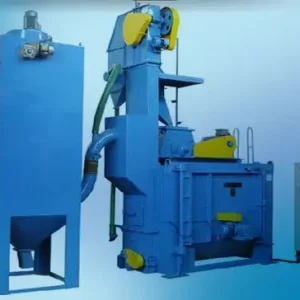
Industries that already rely on shot blasting for cleaning and peening often add powder coating as the next finishing step.
Common Challenges in Sand Blasting and How to Solve Them
Sand Blasting for Shipbuilding & Marine Industries
Emerging Trends in Shot Blasting Machines: Insights from Leading Manufacturers in India
Manual vs. Automatic Coating: A Quick Comparison
| Factor | Manual Coating | Automatic Coating System |
| Finish consistency | Depends on operator | Highly uniform |
| Speed | Slower | Continuous, high volume |
| Powder usage | Higher waste | Recovered and reused |
| Labour | High | Low |
| Best for | Small batches | Medium to large production |
How to Choose the Right Automatic Coating System
Ask these questions before you buy:
- What size and weight are your parts? This sets conveyor and oven dimensions.
- What is your daily output? Match line speed to production targets.
- How often do colours change? Frequent changes need quick-change booths.
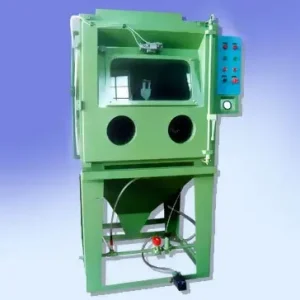
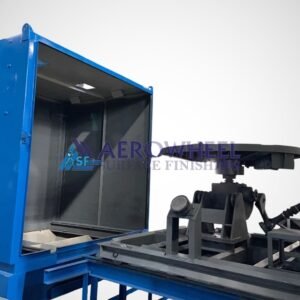
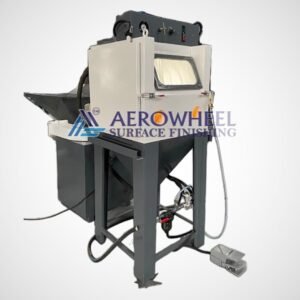
- Is your surface preparation adequate? Poor preparation causes coating failure, whatever the machine. A reliable blast room and paint booth setup can support the process.
- What after-sales support is offered? Spare parts and service keep downtime low.
Work with a manufacturer that offers customisation, spare parts and lifetime support. Aerowheel follows this approach for surface preparation equipment and designs machines around client requirements.
Maintenance Tips
- Clean filters and booths regularly to prevent contamination.
- Check guns and powder hoses for wear.
- Monitor oven temperature to keep the cure consistent.
- Keep conveyors lubricated and aligned.
Frequently Asked Questions
What is an automatic powder coating machine used for?
It coats metal parts with a durable, even finish. Typical uses are automotive parts, equipment frames, appliances and structural steel.
How is an automatic system different from a manual one?
An automatic system uses reciprocators or robots instead of hand-held guns. This gives more consistent coverage, faster output and less wasted powder.
Can powder coating be applied without surface preparation?
Not reliably. Rust, oil and scale prevent proper adhesion, so cleaning or blasting comes first.
Is powder coating eco-friendly?
It is considered cleaner than solvent paint because it releases minimal VOCs, and overspray can be recovered and reused.
Which parts can be powder coated?
Most metal parts that tolerate curing heat, including steel and aluminium components.
Conclusion
An automatic powder coating machine delivers consistent quality, lower waste and higher output. It pays off most where volumes are steady and finish standards are strict. Pair it with proper surface preparation, choose equipment that fits your parts and output, and select a supplier who supports the machine long-term.
Need surface preparation equipment before coating? Contact Aerowheel to discuss a solution for your plant.