



The surface finishing industry is entering a new era of intelligent manufacturing. In 2026, manufacturers are no longer investing in automation simply to reduce labour—they are adopting smart technologies to improve product quality, increase production speed, reduce operating costs, and meet stricter environmental and safety standards.
Industries such as automotive, aerospace, heavy engineering, steel fabrication, railways, oil & gas, and industrial manufacturing are rapidly modernizing their surface preparation and finishing processes. From AI-powered robotic finishing cells to PLC-controlled shot blasting machines, automation is transforming every stage of surface finishing. Recent product launches and industry reports show growing adoption of collaborative robotic finishing systems, AI-assisted process control, and predictive maintenance technologies.
At Aerowheel Surface Finishing, we believe automation is the future of industrial surface preparation, helping manufacturers achieve greater productivity while maintaining exceptional quality.
Why Automation Is Becoming Essential
Modern manufacturers face several challenges, including:
- Rising labour costs
- Skilled workforce shortages
- Higher quality expectations
- Faster delivery schedules
- Increasing energy costs
- Strict environmental regulations
Automation helps solve these challenges by delivering faster, more accurate, and highly repeatable manufacturing processes.
Top Automation Trends in Surface Finishing for 2026
1. Smart Shot Blasting Machines
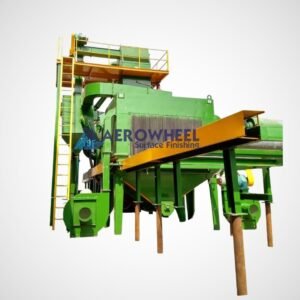
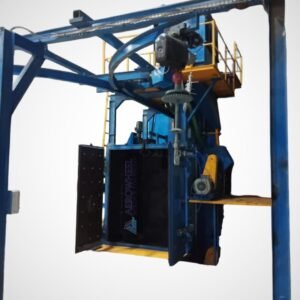
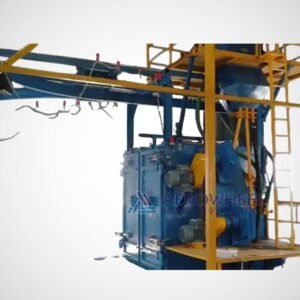
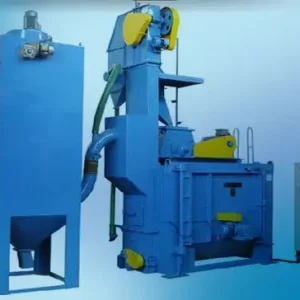
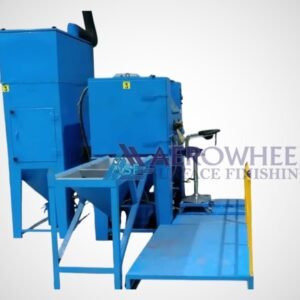
Modern shot blasting machines are equipped with intelligent control systems that automatically optimize machine performance.
Advanced features include:
- PLC-based operation
- Touchscreen HMI controls
- Automatic blast wheel adjustment
- Real-time machine monitoring
- Production data logging
These systems improve cleaning consistency while reducing operator intervention.
2. Robotic Surface Finishing
One of the biggest trends in 2026 is the adoption of robotic finishing systems.
Robots are increasingly used for:
- Grinding
- Sanding
- Deburring
- Polishing
- Surface preparation
- Component finishing
New collaborative robotic finishing cells are making automation practical even for small and medium-sized manufacturers by reducing programming complexity and improving flexibility.
3. AI-Powered Process Optimization
Artificial Intelligence is beginning to improve surface finishing operations.
AI systems can:
- Optimize blasting parameters
- Detect process variations
- Improve finishing quality
- Reduce abrasive consumption
- Recommend maintenance schedules
Some advanced robotic systems now adapt to different part geometries in real time instead of relying only on fixed programs.
4. Industry 4.0 Integration
Surface finishing equipment is becoming part of connected smart factories.
Industry 4.0 enables:
- Real-time production monitoring
- Machine connectivity
- Cloud-based reporting
- Remote diagnostics
- Performance analytics
Production managers can monitor multiple machines from a central dashboard, improving decision-making and overall plant efficiency.
5. Predictive Maintenance
Traditional maintenance often results in unexpected downtime.
Modern machines now use sensors to monitor:
- Bearing condition
- Blast wheel performance
- Motor temperature
- Vibration
- Dust collector efficiency
Predictive maintenance helps identify potential issues before they lead to machine failure, reducing downtime and repair costs.
6. Automated Abrasive Recovery Systems
Abrasive recovery systems have become much more efficient.
Modern systems automatically:
- Recover reusable abrasive
- Remove dust
- Separate contaminants
- Return clean media to the blasting system
Benefits include:
- Lower abrasive consumption
- Reduced operating costs
- Continuous production
- Improved cleaning quality
7. Energy-Efficient Surface Finishing Equipment
Energy efficiency is now a major focus for manufacturers.
Modern equipment includes:
- High-efficiency blast turbines
- Variable Frequency Drives (VFDs)
- Energy-saving motors
- Optimized air consumption
- Intelligent power management
These improvements reduce electricity usage while maintaining high production output.
8. Advanced Dust Collection Technology
Environmental compliance has become increasingly important.
Modern dust collection systems feature:
- High-efficiency cartridge filters
- Automatic filter cleaning
- Improved airflow control
- Better operator visibility
- Reduced airborne emissions
Cleaner working environments also improve employee safety and equipment reliability.
9. Automated Paint Finishing Systems
Automation is extending beyond surface preparation into the painting process.
Modern paint booths now include:
Paint Booth Downtime – Causes and Solutions
Benefits of Sand Blasting Over Manual Cleaning Methods
Portable vs Cabinet Type Sand Blasting Machines – Pros and Cons
- Automatic spray guns
- Robotic painting systems
- Conveyor integration
- Temperature control
- Smart curing systems
These technologies improve coating consistency while reducing paint wastage.
10. Digital Quality Inspection
Manual inspection is gradually being replaced by machine vision systems.
Automated inspection can detect:
- Surface defects
- Incomplete cleaning
- Coating inconsistencies
- Pattern deviations
- Dimensional variations
This improves quality control while reducing inspection time.
Benefits of Automation in Surface Finishing
Manufacturers adopting automation experience several advantages:
Higher Productivity
Automated systems operate faster and more consistently than manual processes.
Consistent Surface Quality
Automation minimizes human error, producing uniform cleaning and finishing results.
Reduced Labour Dependency
Manufacturers can overcome labour shortages while improving operational efficiency.
Lower Operating Costs
Reduced rework, lower abrasive consumption, and improved energy efficiency contribute to significant cost savings.
Improved Workplace Safety
Automation minimizes worker exposure to dust, abrasive media, and repetitive manual tasks.
Better Equipment Utilization
Smart monitoring and predictive maintenance maximize machine uptime and improve overall equipment effectiveness.
Industries Driving Automation
Automation is expanding rapidly across industries such as:
- Automotive Manufacturing
- Aerospace
- Steel Fabrication
- Heavy Engineering
- Railway Manufacturing
- Oil & Gas
- Construction Equipment
- Defence Manufacturing
- Foundries
- Industrial Machinery
These sectors demand higher productivity, tighter quality control, and greater manufacturing flexibility.
Challenges in Automation Adoption
Despite its benefits, automation also presents certain challenges:
- Higher initial investment
- Operator training requirements
- System integration complexity
- Maintenance of advanced control systems
However, for most medium and large manufacturers, the long-term productivity gains typically outweigh the upfront costs.
What to Look for in an Automated Surface Finishing System
Before investing, manufacturers should evaluate:
- Level of automation required
- Production volume
- Component size and complexity
- PLC and HMI capabilities
- Energy efficiency
- Abrasive recovery system
- Dust collection efficiency
- After-sales service and technical support
- Future scalability
Selecting the right system ensures long-term productivity and return on investment.
Why Choose Aerowheel Surface Finishing?
At Aerowheel Surface Finishing, we design and manufacture advanced surface finishing equipment that meets the evolving needs of Industry 4.0.
Our product range includes:
- Airless Shot Blasting Machines
- Roller Conveyor Shot Blasting Machines
- Hanger Shot Blasting Machines
- Blast Room Systems
- Wet Blast Cabinets
- Abrasive Blast Cabinets
- Paint Spray Booths
- Shot Peening Machines
- Rotary Indexing Machines
- Roll Etching Machines
Why Manufacturers Choose Us
- Automation-ready machine designs
- PLC-based control systems
- Customized engineering solutions
- Energy-efficient equipment
- Durable industrial construction
- Reliable after-sales support
- Industry-specific surface finishing solutions
We help manufacturers modernize their production facilities with technologies that improve efficiency, quality, and long-term profitability.
Final Thoughts
Automation is redefining the surface finishing industry in 2026. Technologies such as AI-powered robotic finishing, smart shot blasting machines, predictive maintenance, Industry 4.0 connectivity, and energy-efficient systems are helping manufacturers achieve higher productivity, lower operating costs, and superior product quality. As manufacturing continues to evolve, businesses that invest in automated surface finishing solutions will be better positioned to compete in both domestic and global markets.
If you’re planning to upgrade your manufacturing facility with automated surface finishing equipment, Aerowheel Surface Finishing offers innovative and customized solutions designed for the future of industrial manufacturing.
Frequently Asked Questions (FAQs)
1. What is automation in the surface finishing industry?
Automation involves using PLCs, robotics, AI, sensors, and smart control systems to perform surface preparation and finishing tasks with minimal manual intervention.
2. Which industries benefit the most from automated surface finishing?
Automotive, aerospace, railways, heavy engineering, steel fabrication, oil & gas, foundries, and industrial machinery manufacturers benefit significantly from automation.
3. How does automation improve surface finishing quality?
Automated systems provide consistent blasting pressure, controlled process parameters, precise robotic movement, and real-time monitoring, reducing defects and improving repeatability.
4. Is automation suitable for small and medium-sized manufacturers?
Yes. New collaborative robotic finishing cells and modular automation solutions are making advanced surface finishing automation more accessible for SMEs than before.
5. Why should manufacturers invest in automated surface finishing equipment?
Automation improves productivity, reduces labour dependency, lowers operating costs, enhances product quality, minimizes downtime, and supports long-term business growth.