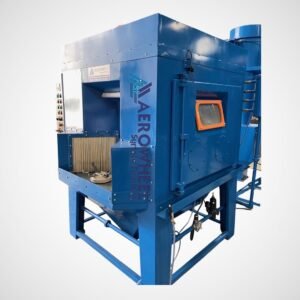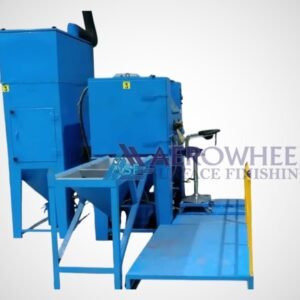




In today’s competitive manufacturing industry, product quality is determined not only by precision machining and material selection but also by the quality of the surface finish. Whether you’re manufacturing steel structures, automotive components, railway parts, heavy machinery, or industrial equipment, proper surface finishing improves durability, corrosion resistance, product appearance, and overall performance.
Surface finishing is much more than cleaning a metal surface—it is a complete process that prepares components for painting, powder coating, plating, assembly, or long-term industrial use. Choosing the right surface finishing solution can reduce maintenance costs, improve coating life, and increase production efficiency.
At Aerowheel Surface Finishing, we offer a complete range of industrial surface finishing solutions designed to meet the requirements of modern manufacturing industries.
What Is Surface Finishing?
Surface finishing is the process of cleaning, preparing, strengthening, or modifying the surface of a component to improve its appearance, durability, and performance.
The objectives of surface finishing include:
- Removing rust and mill scale
- Cleaning contaminants
- Improving coating adhesion
- Increasing corrosion resistance
- Enhancing fatigue strength
- Creating decorative finishes
- Improving dimensional accuracy
- Extending product life
It is an essential step before painting, powder coating, galvanizing, electroplating, or final assembly.
Why Surface Finishing Is Important
A properly finished surface offers several long-term benefits.
Improves Corrosion Resistance
Removing contaminants and applying coatings on a properly prepared surface helps protect components from rust and environmental damage.
Enhances Coating Adhesion
Shot blasting and abrasive blasting create an anchor profile that allows paints and coatings to bond securely.
Increases Product Life
Surface finishing protects components from wear, corrosion, and mechanical damage, extending their service life.
Improves Product Appearance
Uniform finishing gives products a clean, professional, and premium look.
Reduces Maintenance Costs
Long-lasting coatings require less maintenance, reducing repair and replacement expenses.
Common Surface Finishing Processes
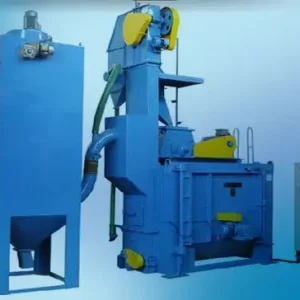
1. Shot Blasting
Shot blasting uses steel shots propelled at high speed to clean metal surfaces and create the ideal profile for coating.
Applications
- Structural steel
- Automotive components
- Railway parts
- Heavy fabrication
- Steel plates
- Castings
- Forgings
Benefits
- Removes rust and mill scale
- Improves coating adhesion
- Uniform cleaning
- High productivity
2. Abrasive Blasting
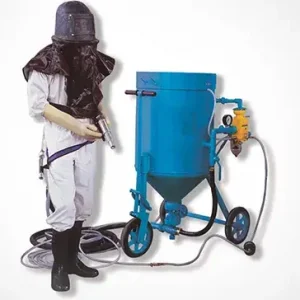
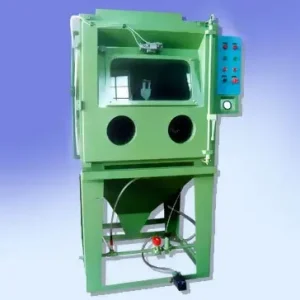
Abrasive blasting uses compressed air to project abrasive media onto the workpiece.
It is suitable for:
- Precision components
- Small fabricated parts
- Maintenance applications
- Surface cleaning before painting
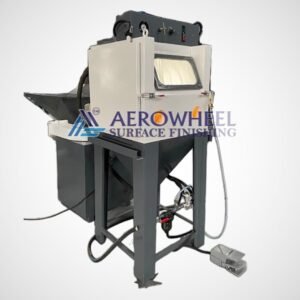
3. Wet Blasting
Wet blasting combines abrasive media with water to create a smooth surface finish while reducing dust.
Ideal For
- Aluminium components
- Stainless steel
- Aerospace parts
- Medical equipment
- Decorative components
Advantages
- Low dust generation
- Smooth satin finish
- Gentle cleaning
- Excellent cosmetic appearance
4. Shot Peening
Unlike shot blasting, shot peening is used to strengthen metal surfaces rather than clean them.
Applications include:
- Springs
- Gears
- Crankshafts
- Connecting rods
- Aerospace components
Benefits include:
- Improved fatigue strength
- Longer component life
- Better crack resistance
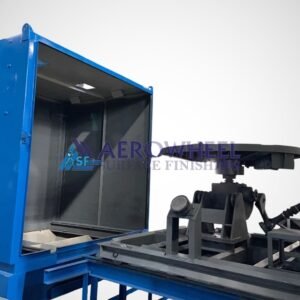
5. Paint Spray Booths
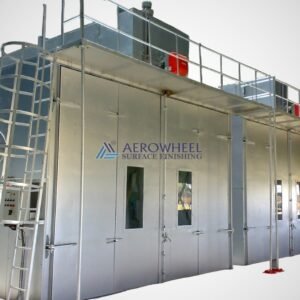
Paint spray booths provide a controlled environment for applying high-quality coatings.
Benefits include:
- Dust-free painting
- Uniform finish
- Faster drying
- Reduced paint wastage
6. Roll Etching
Roll etching creates precise textures on industrial rollers used in steel, aluminium, plastic, rubber, and textile manufacturing.
It improves:
- Product appearance
- Surface texture
- Coating adhesion
- Manufacturing consistency
7. Rotary Indexing Machines
These machines automate assembly and production processes by indexing components through multiple workstations.
Applications include:
- Drilling
- Assembly
- Inspection
- Press fitting
- Leak testing
8. Tyre Mould Cleaning Machines
These machines remove rubber residue from tyre moulds without damaging intricate tread patterns.
Benefits include:
- Improved tyre quality
- Reduced production downtime
- Longer mould life
Industries That Depend on Surface Finishing
Surface finishing is essential across a wide range of industries.
Automotive Industry
Surface preparation is used for:
- Engine components
- Brake parts
- Alloy wheels
- Chassis components
- Suspension systems
Steel Fabrication
Blasting prepares:
- Structural steel
- Beams
- Columns
- Fabricated assemblies
- Industrial structures
Railway Industry
Surface finishing is essential for:
Certifications You Must Check Before Buying from Sand Blasting Manufacturers
The Future of Smart Blast Rooms with IoT Controls
How to Choose Between Suction and Pressure Sand Blasting
- Bogies
- Coach frames
- Wheelsets
- Brake systems
- Structural components
Oil & Gas Industry
Applications include:
- Pipelines
- Storage tanks
- Pressure vessels
- Offshore platforms
- Valves
- Pumps
Heavy Engineering
Used for:
- Construction equipment
- Industrial machinery
- Mining equipment
- Cranes
- Fabricated structures
Aerospace Industry
Surface finishing improves:
- Turbine components
- Aircraft parts
- Precision-machined components
- Landing gear systems
Foundries
Cleaning castings before machining or coating ensures better product quality and dimensional accuracy.
Common Surface Defects
Manufacturers frequently encounter:
- Rust
- Mill scale
- Oxidation
- Oil contamination
- Welding slag
- Paint residue
- Uneven surface profiles
These defects can lead to poor coating adhesion, corrosion, and reduced product life if not addressed properly.
How to Choose the Right Surface Finishing Process
The best process depends on several factors:
Material Type
Different metals require different cleaning methods.
Component Size
Large fabricated structures require different equipment than small precision parts.
Surface Finish Requirements
Some applications require rough anchor profiles, while others need smooth cosmetic finishes.
Production Volume
High-volume manufacturing often benefits from automated blasting systems.
Coating Requirements
The type of paint or protective coating influences the required surface preparation method.
Benefits of Modern Surface Finishing Equipment
Investing in advanced surface finishing equipment provides:
- Higher production efficiency
- Better coating performance
- Consistent product quality
- Lower maintenance costs
- Reduced manual labour
- Improved workplace safety
- Faster production cycles
- Longer equipment life
These advantages improve both productivity and profitability.
Choosing the Right Surface Finishing Equipment
Some of the most commonly used industrial machines include:
- Airless Shot Blasting Machines
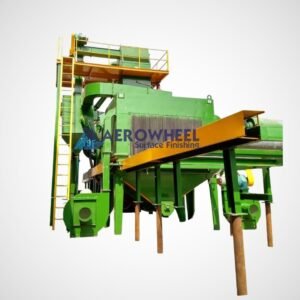
- Roller Conveyor Shot Blasting Machines
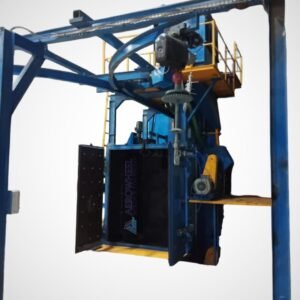
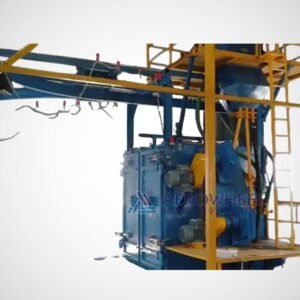
- Hanger Type Shot Blasting Machines
- Abrasive Blast Cabinets
- Wet Blast Cabinets
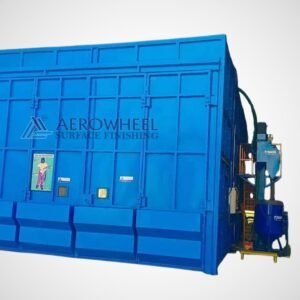
- Blast Room Systems
- Paint Spray Booths
- Shot Peening Machines
- Roll Etching Machines
- Rotary Indexing Machines
- Tyre Mould Cleaning Machines
Selecting the right equipment depends on your production goals, component size, and industry requirements.
Why Choose Aerowheel Surface Finishing?
At Aerowheel Surface Finishing, we specialize in manufacturing complete surface finishing solutions for industries across India.
Our product range includes:
- Shot Blasting Machines
- Shot Peening Machines
- Paint Spray Booths
- Abrasive Blast Cabinets
- Wet Blast Cabinets
- Blast Room Systems
- Roll Etching Machines
- Rotary Indexing Machines
- Tyre Mould Cleaning Machines
Why Customers Choose Us
- Customized machine solutions
- Precision engineering
- High-performance equipment
- Energy-efficient designs
- Reliable after-sales support
- Experienced technical team
- Machines built for long-term industrial use
We work closely with manufacturers to improve production quality, increase efficiency, and reduce operating costs.
Final Thoughts
Surface finishing is one of the most critical stages in modern manufacturing. From removing rust and contaminants to improving coating adhesion, increasing corrosion resistance, and enhancing product appearance, the right surface finishing process directly impacts the quality and lifespan of industrial components.
Whether you’re involved in automotive manufacturing, steel fabrication, heavy engineering, railways, oil & gas, aerospace, or industrial machinery production, investing in advanced surface finishing equipment helps you achieve higher productivity, lower maintenance costs, and superior product quality.
If you’re looking for complete surface finishing solutions for industrial manufacturing, Aerowheel Surface Finishing offers a comprehensive range of machines and customized solutions designed to meet the evolving needs of modern industries.
Frequently Asked Questions (FAQs)
1. What is surface finishing in manufacturing?
Surface finishing is the process of cleaning, preparing, or modifying a material’s surface to improve its durability, appearance, corrosion resistance, and coating performance.
2. Which industries use surface finishing equipment?
Industries such as automotive, steel fabrication, railways, aerospace, oil & gas, construction, heavy engineering, foundries, and industrial machinery manufacturing rely on surface finishing.
3. Why is shot blasting important before painting?
Shot blasting removes rust, mill scale, and contaminants while creating an anchor profile that helps paint and coatings adhere more effectively.
4. What is the difference between shot blasting and shot peening?
Shot blasting is primarily used for cleaning and surface preparation, whereas shot peening is used to improve fatigue strength and increase the lifespan of metal components.
5. How do I choose the right surface finishing machine?
The ideal machine depends on the material, component size, production volume, required surface finish, and the type of application. Consulting an experienced manufacturer helps ensure you select the right solution.