



Paint booth filters play a critical role in maintaining paint quality, airflow balance, worker safety, and fire prevention. However, one of the most common questions in industrial painting is:
How often should paint booth filters be replaced?
The answer is not the same for every booth. Filter replacement depends on usage, paint type, booth design, and maintenance practices. Ignoring filter replacement can lead to paint defects, higher energy costs, and serious safety risks.
At Aerowheel Surface Finishing, we recommend replacing filters based on performance indicators, not guesswork.
Why Timely Filter Replacement Is Important
Paint booth filters control both incoming clean air and outgoing contaminated air. Over time, filters get loaded with dust, paint overspray, and particles.
If filters are not replaced on time:
- Airflow becomes weak and uneven
- Paint defects increase
- Overspray settles back on surfaces
- Exhaust fans work harder
- Fire risk rises
- Energy consumption increases
Timely replacement keeps the booth efficient and safe.
How Often Intake (Fresh Air) Filters Should Be Replaced
Intake filters prevent dust and dirt from entering the painting zone. Their condition directly affects surface finish quality.
Typical replacement frequency:
Every 1 to 3 months
Intake filters should be replaced sooner if:
- The surrounding environment is dusty
- Paint defects like dust nibs increase
- Airflow into the booth feels restricted
Clean intake air = clean paint finish.
How Often Exhaust / Overspray Filters Should Be Replaced
Exhaust filters capture paint overspray and prevent it from circulating inside the booth or being released into the environment.
Typical replacement frequency:
Every 2 to 6 weeks, depending on paint usage
Exhaust filters need replacement sooner when:
- Visible paint buildup is high
- Airflow drops noticeably
- Booth pressure increases
- Paint mist starts lingering inside the booth
These filters are critical for both safety and performance.
Ceiling and Plenum Filters Replacement Frequency
Ceiling or plenum filters are commonly used in down-draft and enclosed booths to distribute clean air evenly.
Typical replacement frequency:
Every 3 to 6 months
Delayed replacement can cause:
- Uneven airflow
- Patchy paint finish
- Coating thickness variation
These filters are essential for uniform coating quality.
Floor Filters in Down-Draft Booths
Floor filters capture overspray at the lowest point of the booth.
Typical replacement frequency:
Every 1 to 2 months
How Paint Spray Booth Filters Work and Why They Matter
What Is a Wet Blast Cabinet and When Should You Use It?
Innovations by Sand Blasting Machine Manufacturers in 2025
If floor filters clog:
- Airflow balance is disturbed
- Overspray returns to the surface
- Drying becomes inconsistent
Activated Carbon Filters (If Used)
Activated carbon filters absorb solvent vapors and odors.
Typical replacement frequency:
Every 6 to 12 months, depending on vapor load
They must be replaced earlier if:
- Odors increase
- Environmental limits are exceeded
- Filter saturation is detected
Signs That Filters Need Immediate Replacement
Regardless of time schedule, filters must be replaced immediately if you notice:
- Drop in airflow
- Increase in paint defects
- Paint mist floating in the booth
- Higher fan noise or power usage
- Strong paint smell inside the booth
Performance signs are more reliable than calendar dates.
Why Overusing Filters Is a Costly Mistake
Many units delay filter replacement to save cost. In reality, this increases:
- Paint wastage
- Rework and repainting
- Electricity bills
- Fire risk
- Equipment wear
Replacing filters on time is far cheaper than fixing quality and safety problems later.
Best Practice: Create a Filter Replacement Schedule
A proper filter replacement schedule should be based on:
- Booth usage hours
- Type of paint and overspray volume
- Airflow readings
- Visual inspection
Maintaining a simple logbook helps track filter life and avoid guesswork.
Aerowheel Surface Finishing’s Recommendation
At Aerowheel Surface Finishing, we advise customers to:
- Inspect filters regularly
- Replace filters before airflow drops
- Use correct filter types for each booth section
- Never overload exhaust filters
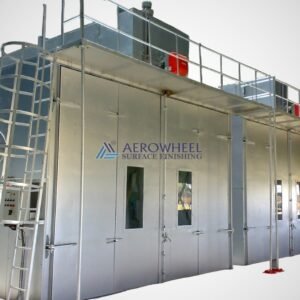
Our paint spray booths are designed for easy filter access and quick replacement, reducing downtime.
Final Thoughts
There is no single fixed answer to how often paint booth filters should be replaced. The right time depends on usage, environment, and performance indicators. What matters most is not delaying replacement once filters start affecting airflow and paint quality.
Regular filter replacement ensures:
- Consistent paint finish
- Safe working conditions
- Lower energy costs
- Longer equipment life
If you want reliable paint booth performance with minimal issues, filter maintenance should be a top priority.
For expertly designed, low-maintenance paint spray booths, Aerowheel Surface Finishing delivers solutions built for real industrial demands.